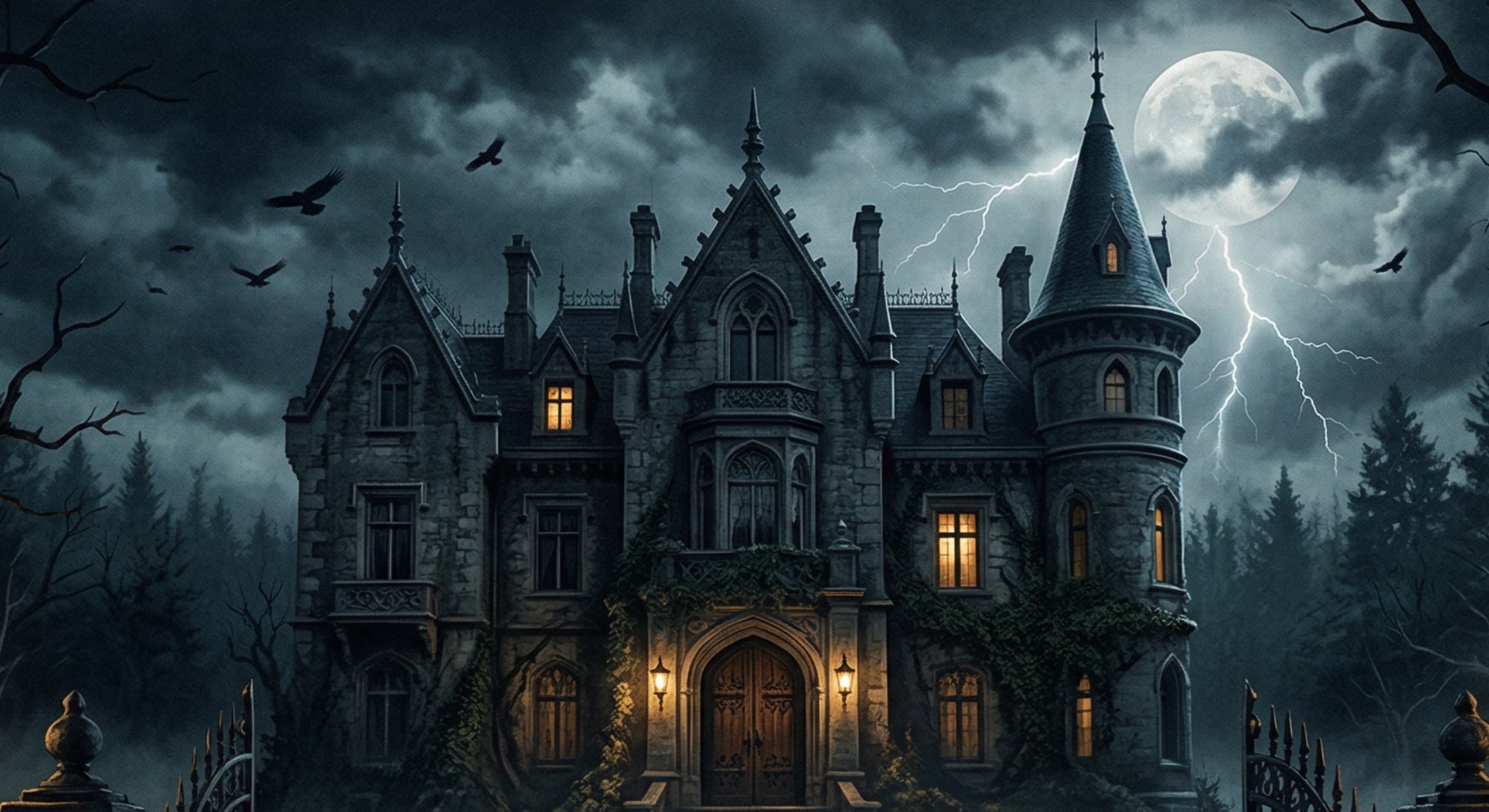
The short answer for a printable murder mystery for 4 players
Four is a comfortable count for a detective case file. It is enough hands to spread the documents and read them all within a quarter of an hour, and small enough that everyone knows the whole file rather than a corner of it.
The format is the same across all seven detective case files: one PDF, $39, 2 to 6 investigators, no host, hints included, and a solution you open only at the end. You pay by card, the file is generated and emailed within seconds, and nothing is shipped. It is laid out on A4 paper; on US Letter, tick fit to page and the print shrinks by about six percent with nothing cut. Black and white on a home printer is enough.
What you are buying is the case itself: the evidence, the statements, the contradictions hidden between them, and the method to work through them. The printable murder mystery kit page lays out how the case files differ from the role-play kits if you have never seen either.
Why a role-play kit does not work at four
A murder mystery kit hands each guest a suspect to play and ends with a secret ballot. For that ballot to mean anything, the room needs a real spread of suspects, and that is why the kits are written for 6 to 12 players. At four, one of you is the culprit and the other three vote: every accusation has one chance in three of being right by pure luck, before anyone has read a clue. The host is a fifth person who cannot vote, because the host reads the solution. The evening collapses into a coin toss with costumes.
The host guide of every kit has a section on adapting the game to your number of players, and the floor of that section is six. Below six there is nothing to adapt, because the core cast of six roles is the minimum the story runs with.
A case file is built the other way around. Nobody is the culprit. The four of you are investigators and the suspects are on paper. That is why the format works from 2 to 6 and fits two couples, four colleagues or a family of four with teenagers equally well, since the recommended age is 14 and up.
Four jobs for four investigators
The difference between a good four-player session and a muddled one is that everyone has a job from the first minute. Assign them before you open the file.
The reader: reads every statement aloud, once, in the order the file gives them, so the whole table hears the same words.
The timekeeper: owns the timeline sheet and challenges any time that does not fit.
The sorter: owns the table, groups the evidence by suspect and finds a document on request.
The devil's advocate: argues for the innocence of whoever the table currently likes for it.
The reader sets the pace and stops the common four-player failure where two people read silently while two wait. The timekeeper is the most important job in the room: a case is usually broken by two statements that cannot both be true on the same clock, and only the person holding the timeline sees it.
The devil's advocate is the job people resist and the one that saves the accusation. Four people agree too fast. Someone whose role is to poke holes forces the group to prove the case rather than feel it. Rotate the jobs if you play a second case, so the person who kept the timeline gets to argue next time.
The Heist of the Century: the right first case for four
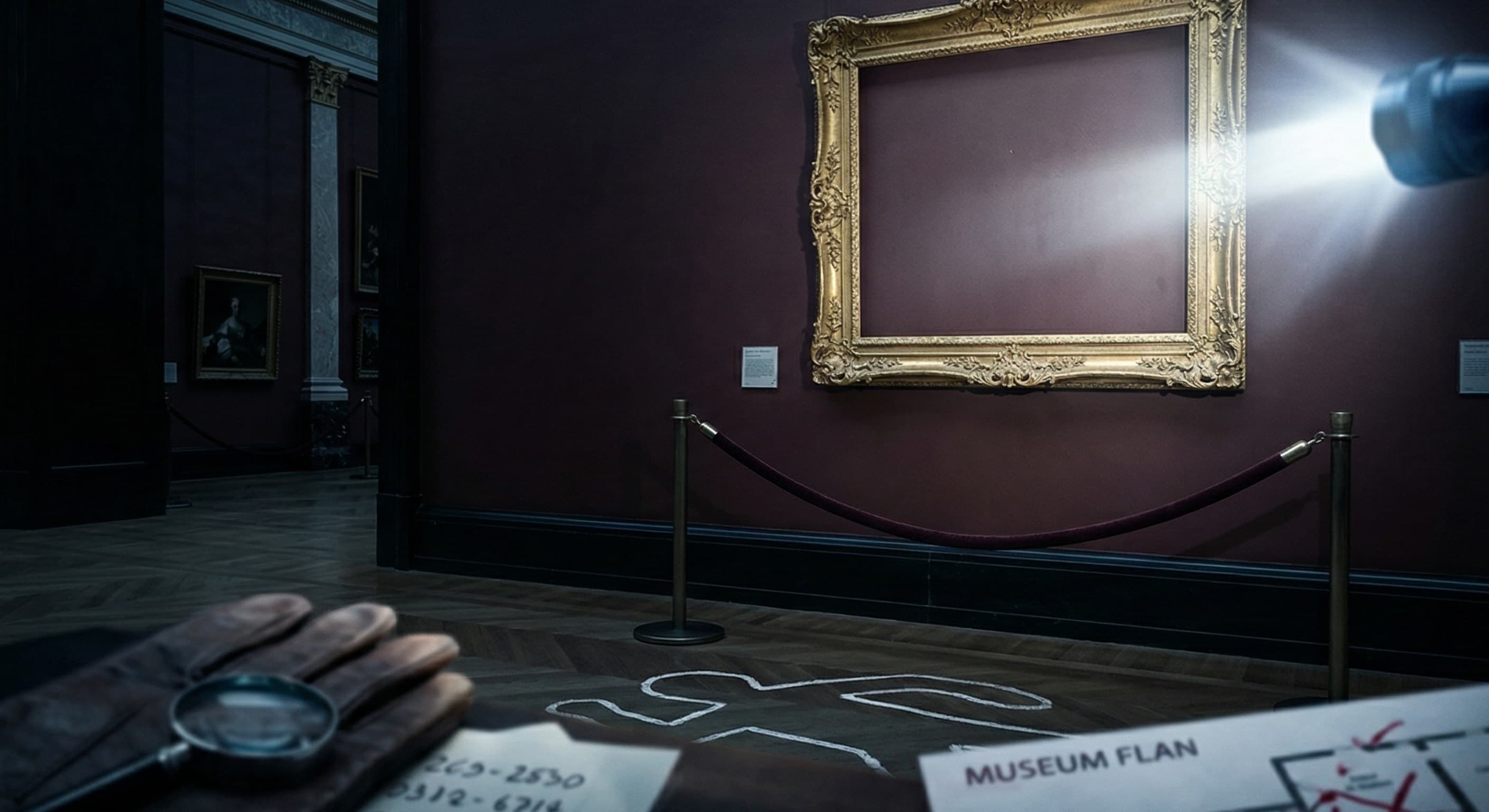
The Heist of the Century is the case we recommend for a first four-player night. A priceless painting has been taken from the Louvre, and your job is to analyze the clues and unmask the thief. It is rated 3 out of 5 and runs 1.5 to 2 hours, which leaves room for a slow first read and a proper argument at the end.
It suits four because there is a lot to sort. The sorter has real work from the start, the timekeeper has a night of comings and goings to reconstruct, and the reader has statements that reward being heard aloud rather than skimmed. A heist also changes the mood at the table: some groups prefer starting with a theft rather than a death, and this is the file for them.
Expect the first thirty minutes to feel like too much paper. That is normal and it passes as soon as the timeline starts filling in. If the table is still lost after an hour, take one hint and keep going: at difficulty 3 the case is meant to be solved, not survived.
The Enigma Code: ciphers that reward a team of four
The Enigma Code is the second pick, and the better one for a group that likes puzzles inside the puzzle. It is set at Bletchley Park in 1943: intercepted messages have to be decoded and a mole unmasked. It is rated 4 out of 5 and runs 2 hours, and ciphers are the reason for both numbers.
Four is close to the ideal count for it because the work divides. Two people can decode while two people read the statements, then swap findings every fifteen minutes. The reader's job matters more here than in any other case: the decoders disappear into their sheets, and someone has to keep feeding them the context that tells them which message matters. Do not let the table split into a code half and a people half for the whole evening. The mole is found where the two halves meet.
Play it second, not first. A group that has been through The Heist of the Century knows how to build a timeline and will spend its energy on the ciphers instead of on learning the method. A group of four regular puzzle players can go straight to it.
Pacing a four-player session and using the hints
Plan the evening in three blocks. Fifteen minutes of silent reading, each person on a quarter of the file, then a round where each reads their share aloud. About an hour of cross-referencing, building the timeline and testing each suspect against the documents. Then twenty minutes for the accusation: name, method, motive, and the evidence that carries each. Starting at 8:00 pm after dinner, you open the solution around 9:45 pm.
Agree the hint rule before you open the file, not when you are stuck. A workable one: no hints in the first hour, then one hint whenever the table has gone ten minutes without a new fact. Hints are part of the file and they exist for exactly that moment. A group that takes one hint and closes the case has done better than a group that stalls at 11:00 pm out of pride.
The solution is the last block, not an afterthought. Read it aloud, all of it, and compare it with your accusation point by point. Finding out what you missed is where the group learns to do better on the next case.
Two couples at the table without turning it into a contest
Four people are often two couples, and the one rule that keeps the evening pleasant is to split the partners across jobs. Put one half of each couple on the paper jobs, reader and sorter, and the other half on the thinking jobs, timekeeper and devil's advocate. Nobody ends up arguing with the person they came with about a receipt, and nobody keeps score by household.
There is no scoring in a case file anyway. The four of you either prove the case or you do not, and the solution is the only judge. That is what makes it work for two couples who have never played anything like this: no acting, no secret one partner has to keep from the other, no ballot where a friendship is on the line. The opponent is the case.
If you liked it at four, the count moves in both directions without changing the file. The same case plays as a printable murder mystery for 2 players on a quieter night, and when a fifth friend asks to join, a printable murder mystery for 5 players explains the two options that open up at that count.
Frequently asked questions
Can four people play a murder mystery kit if one of them hosts?+
No. That leaves three players, and the kits are written for 6 to 12 because the ballot needs a real spread of suspects. The host guide's section on adapting the game starts at six and goes no lower. For four people, a detective case file is the format that actually works: cooperative, no host, 2 to 6 investigators.
How long does a printable murder mystery for 4 players take?+
Between 1.5 and 2 hours of play, depending on the case: The Heist of the Century is announced at 1.5 to 2 hours, The Enigma Code at 2 hours. Four people usually sit at the upper end because there is more discussion than with two. Add twenty minutes at the end for reading the solution together.
Do we need to print the case file in color?+
No. The files print in color or in black and white on any home printer, and a case file is documents to read rather than pictures to admire. Print the whole PDF once, then put the hint pages and the solution pages in two separate envelopes before anyone reads them.
What happens if we accuse the wrong person?+
You open the solution and find out where the reasoning went wrong. Nothing is lost: the solution walks through the answer, and comparing it with your accusation is part of the evening. Most groups who miss at their first case find one timeline entry they copied wrong or one statement they took on trust.
Which case file is easiest for four beginners?+
Vanished in Paris and The Phantom Affair are both rated 3 out of 5 and run 1.5 hours, which makes them the shortest way in. The Heist of the Century is also rated 3 and runs 1.5 to 2 hours, with more evidence to sort, which suits four hands well. Keep the difficulty 4 and 5 files for a second night.