Six is the smallest size a printable murder mystery kit is built for
All seven kits are written for 6 to 12 players and sold by tier: $39 for 6 to 8, $49 for 9 to 10, $59 for 11 to 12. Six is the floor of the first tier. You choose the tier at checkout, the PDF is built for it, and one purchase covers the whole group: at six, $39 works out to about $6.50 a head for a two-hour evening.
Nothing about six is a compromise. The core cast of six roles is the heart of every scenario; the extra characters that join at eight, ten and twelve add suspects, not story. At six you are playing the version of the mystery every other size is built on. The murderer and the key witness are both in the room, as they are at every count.
The file arrives by email within seconds of paying by card, and nothing is shipped. It is laid out on A4; on US Letter, tick fit to page in the print dialog and the page shrinks by about six percent. Why your murder mystery PDF is cut to your group size explains what the tier changes inside the file, and the printable murder mystery kit page describes what is in every download.
What the host guide does at six players
Every kit's host guide has a section called Adapting the game to your number of players. At six it is the shortest section you will read: the core six roles are handed out, and that is the whole cast. The two roles that would join at eight, and the further roles at ten and twelve, are not handed out. They stay in the story as guests, present in the setting, and if a clue mentions one of them the host answers briefly for that character.
That last point is the only real adaptation a six-player host makes. Read the solution and the clues before the night, note which of the absent characters appear in a clue, and have one line ready for each: where they were, what they saw. The guide gives you enough to do that. You are not inventing plot, you are filling in a name.
Everything else runs as written: the introduction to read aloud, the three rounds, the clues handed out by round, the secret ballots and the solution. The host narrates and plays the non-player characters the story needs. At six, with the host outside the cast, seven people are in the room, which is a dinner table and no more.
The dynamics of a six-player table
At six, every player will be questioned by all five others before the first round is over. There is no crowd to hide in and no corner of the room where a shy guest can nurse a drink unnoticed. That sounds like a warning and is actually the point: at six the character sheets get fully used. Every secret comes out or is dodged in front of witnesses, and every alibi is checked by someone.
The host's job changes accordingly. At twelve you spend the night pairing people who have not talked. At six you spend it slowing people down. A round that the guide expects to take thirty minutes can be over in fifteen when six people have each interrogated the other five. Let the round breathe: when the first player says they have nothing left to ask, suggest a second pass with the new clue in hand.
Six is also the count where the ballot is hardest to get right, in the good sense. Five suspects, all thoroughly questioned, all with something to hide, and no idle character to blame. Expect a split vote and a loud reveal. Murder mystery party for small groups covers how the social side changes below eight; this article stays with six exactly.
Two kits that suit a printable murder mystery for 6 players
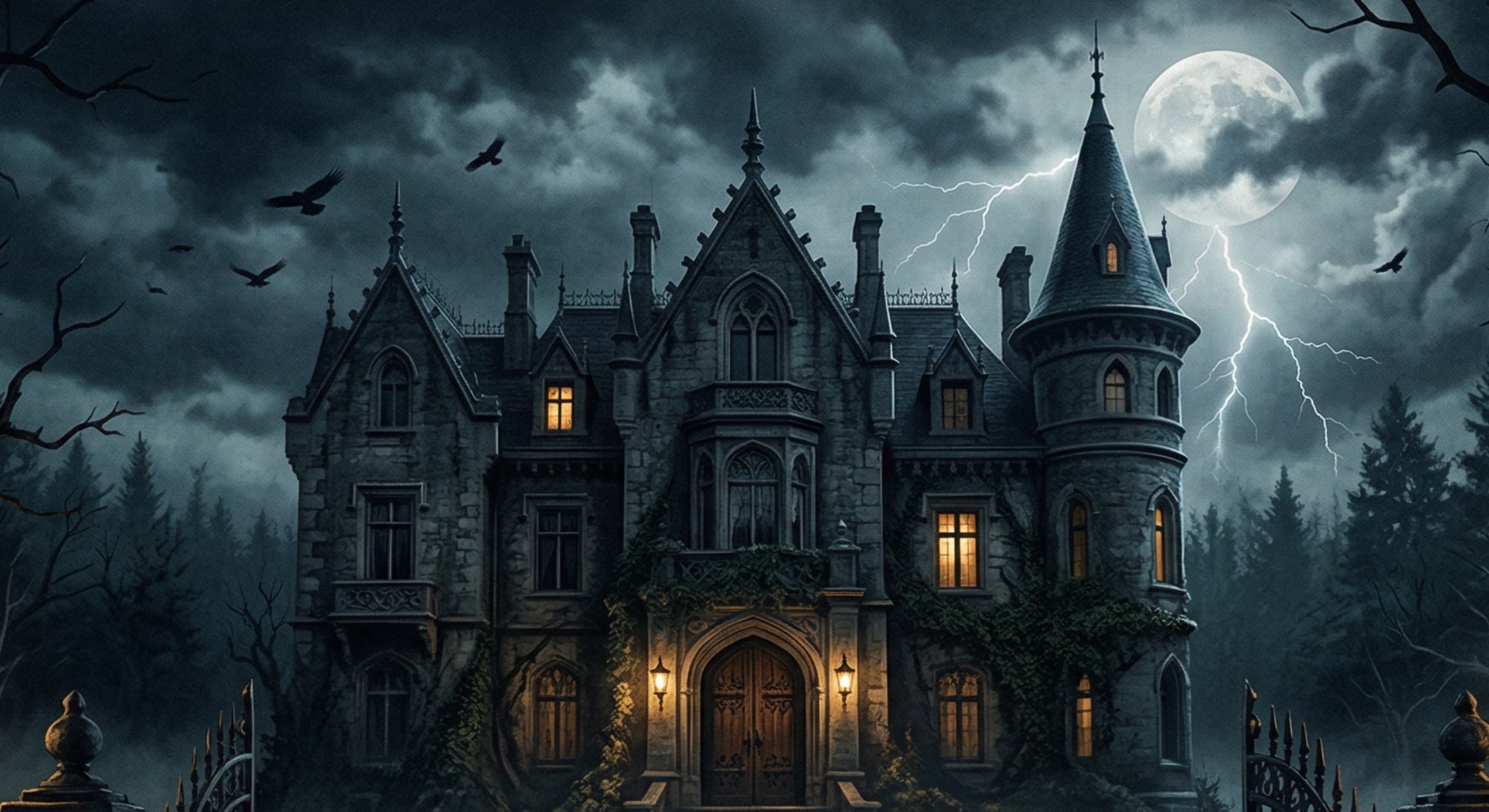
The shorter scenarios suit six best, because a small cast moves through the rounds faster and a story announced at two hours will not feel rushed. The Cursed Manor is the first pick: gothic, a manor in a storm, heirs and their secrets around a disputed inheritance, about 2 hours. An inheritance plot is ideal for six, because every heir has a motive and the questioning is naturally about money and family, which needs no acting to be convincing.
The Cursed Island is the other, also about 2 hours: castaways, a treasure and a traitor. It is the least formal of the seven, which helps a table of six that would rather not dress up, and its adventure setting keeps the conversation moving even for a group that has never played.
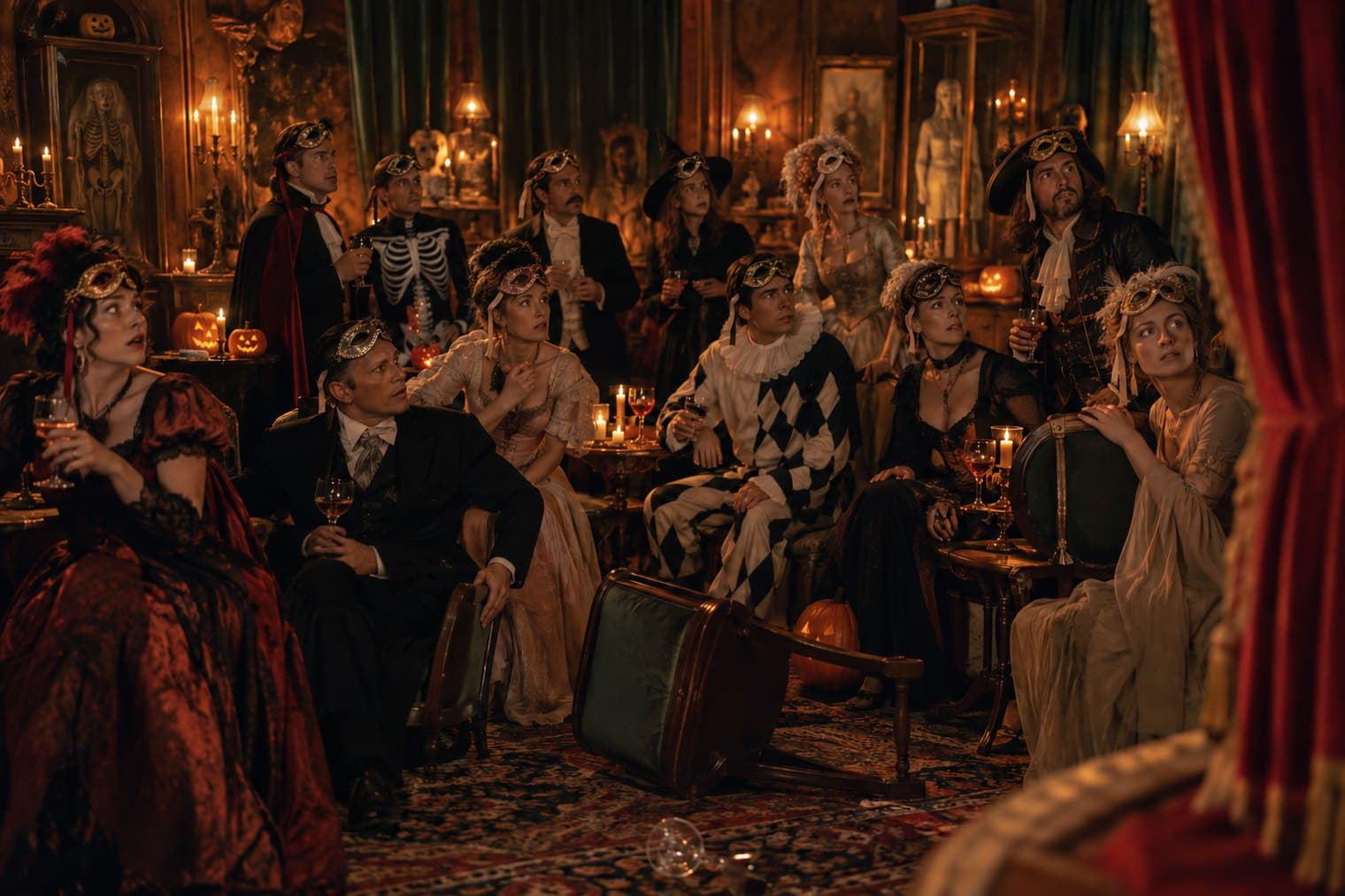
The longer kits still work at six. Murder at the Royal Casino, Crime Aboard the Orient Express, The Masked Ball and The Last Vintage are announced at 2 to 2.5 hours and will run near the short end; Hollywood Noir at 2.5 to 3.5 hours is a long evening for six and better kept for a group that wants exactly that.
Seating and room for six
One table is enough, and it should be a table. Six players and a host fit a standard dining table, and a seated game suits the count: everyone can hear everyone, clues can be laid in the middle, and nobody has to cross a room to find a suspect. Put the host at one end with the guide and the envelopes within reach. Seat the culprit away from the host's end, so that the host's glances do not give anything away.
Do not build conversation zones. At eight and above, a second room helps people break into pairs; at six it empties the table. Keep the whole game in one place and let the conversation move around it. If two players need a private word, the kitchen doorway is far enough.
Light the table, not the room. A lamp or candles on the table and the overhead light off makes a dining room look like a manor without buying a single decoration, which matters because the kit does not include decorations, name tags or place cards. Six place cards handwritten in ten minutes are all the set dressing a six-player table needs.
Pacing three rounds with six players
A six-player evening on a two-hour kit fits comfortably between 7:30 pm and 10:15 pm. Arrival and reading sheets until 8:00 pm. The introduction read aloud, then round one to about 8:30 pm. Food between round one and round two, not during: with six people a meal at the table stops the questioning completely. Round two to about 9:15 pm, dessert, round three to 9:50 pm, ballots, reveal.
The rounds run shorter than they would at a larger size, and that is fine. What you should not shorten is the gap between rounds. Handing out the next round's clues, letting people reread their sheet for what to reveal next, and refilling glasses is where a six-player game recovers its energy.
The ballot at six is quick to collect and worth reading aloud one by one before the solution: with only five suspects, hearing who accused whom is half the fun. Then read the solution from the host guide in full.
The alternative at six: a detective case file
Six is the only count where both formats fit exactly. A detective case file is a cooperative investigation for 2 to 6 players, $39, no host, hints included, solution kept apart: six is its ceiling. So a group of six has a real choice, and it is worth making on purpose.
Choose the case file if one of the six would rather not play a character, if nobody wants to host, or if the group prefers a puzzle to a performance. Choose the kit if the six of you like talking to each other in character and one person is happy to run the night. Both are printed at home, both arrive within seconds, and both cost $39 at this size.
If the group grows, the kit is the format that grows with it: the 6 to 8 tier already covers two more, and a printable murder mystery for 8 players shows what changes when every character of the tier is in play.
Frequently asked questions
Do I need to adapt the game for 6 players?+
Very little. At six the host guide hands out the core cast of six roles and nothing else; the characters that join at larger counts stay in the story as guests. Read the clues before the night, note which absent characters are mentioned, and have one line ready for each. That is the whole adaptation.
Does the host count as one of the 6 players?+
No, the host is outside the six unless the host takes a character. A host may play a suspect who is not the culprit, since the host reads the solution. Most six-player groups have the host stay as narrator and non-player characters, so six players plus the host means seven people in the room.
How much does a printable murder mystery for 6 players cost?+
$39. That is the 6 to 8 player tier, the smallest of the three tiers, and one purchase covers the whole group. The same tier covers seven or eight players, so a late addition costs nothing extra as long as you stay at eight or fewer.
Which kit is best for 6 players?+
The two scenarios announced at about 2 hours, The Cursed Manor and The Cursed Island, suit six best because a small cast moves quickly through the rounds. The 2 to 2.5 hour kits also play well at six and will run near the short end of their range. Keep Hollywood Noir for a group that wants a long night.
Is a kit or a case file better for six people?+
Both fit six exactly. A kit is a social role-play with a host and a secret ballot; a case file is a cooperative investigation with no host and no characters to play. Pick the kit if the group likes to talk in character, and the case file if the group prefers documents and deduction. Both are $39.