The 9 to 10 tier: what a printable murder mystery for 10 players costs
The seven kits are written for 6 to 12 players and sold in three tiers. Ten sits at the top of the middle tier: $49 for 9 to 10 players, which is about $4.90 a head. You choose the tier at checkout, the PDF is built for it and emailed within seconds of paying by card, and nothing is shipped. One purchase covers the group.
Inside the tier, the host guide hands out the core cast of six, the two roles that join at eight, and the two that join at ten. At ten, every character of the tier is in play. At nine, the guide's section on adapting the game to your number of players has you hand out one of the two roles that join at ten and leave the other in the story as a guest; if a clue mentions that character, the host answers briefly for them. Nine and ten buy the same file.
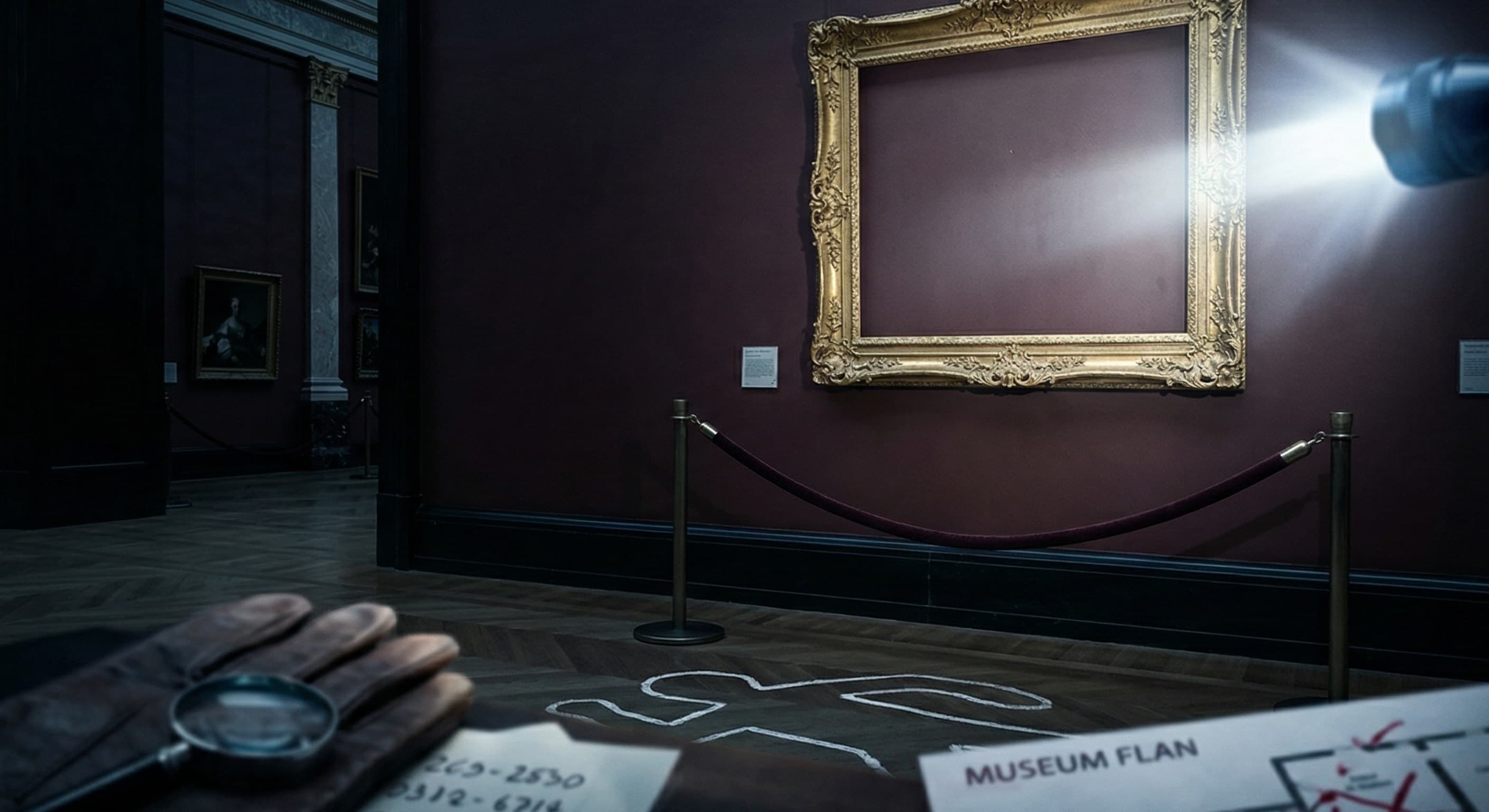
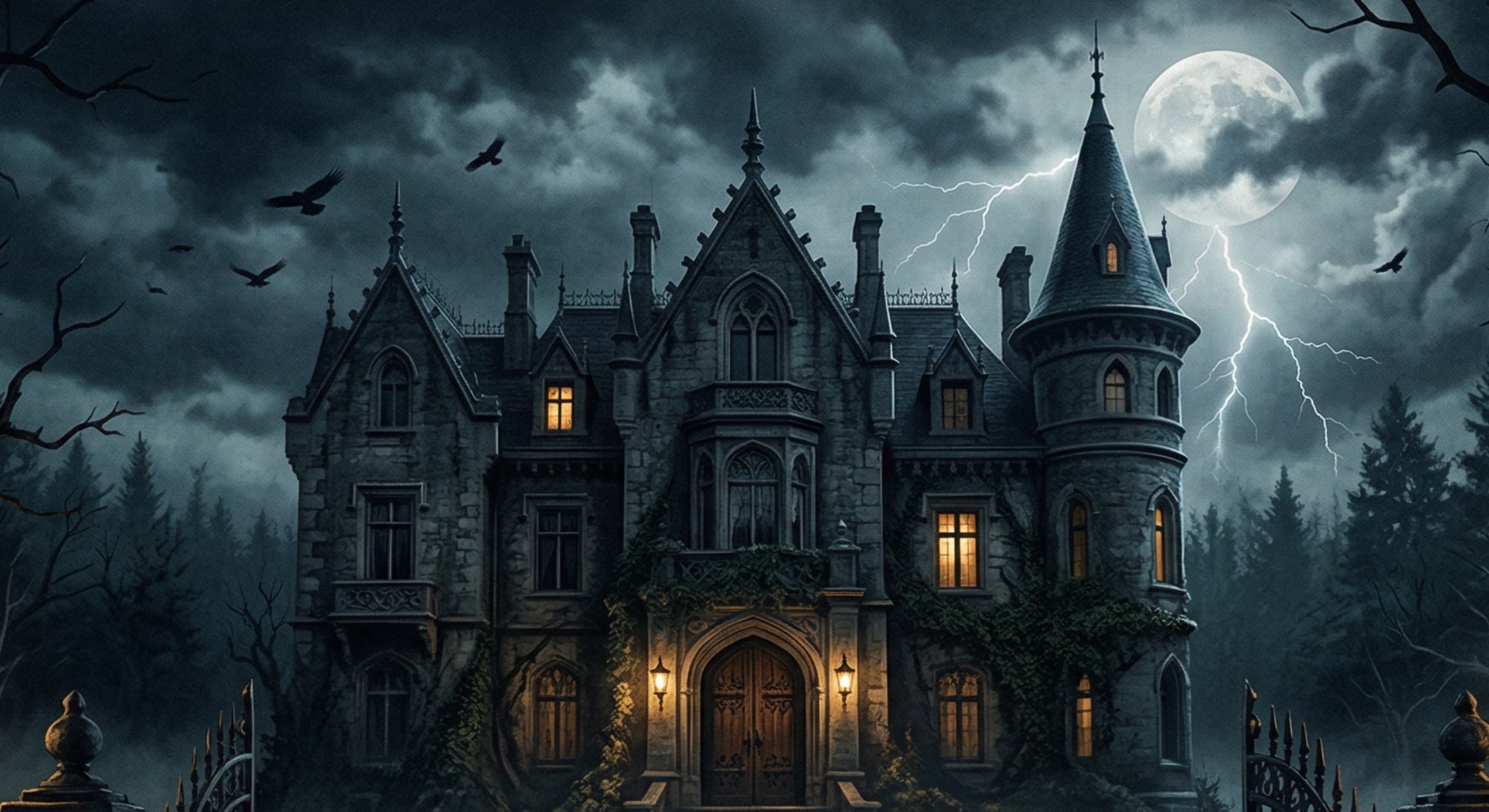
The file holds the host guide, ten character sheets, the clues organized by round, ten secret ballots and the solution. All seven scenarios on the murder mystery kits page are sold in this tier, and the printable murder mystery kit page explains how the tiers are built.
Ten suspects means more interrogations, so plan the time
The arithmetic is simple and hosts underestimate it. At six, each player has five people to question; at ten, nine. A round that takes thirty minutes at eight takes forty to forty-five at ten, because each player wants to get around the room and the room is bigger. Three rounds at that length, plus the introduction, the clues between rounds and the ballot, is 2.5 to 3 hours of play before you count arrivals and food.
Do not try to hold ten players to the timing you used at eight. The guide's rounds are a structure, not a stopwatch, and a round cut short at ten leaves two or three players who never got to ask the question their sheet told them to ask. The evidence is meant to circulate; at ten it needs the extra minutes to do so.
The other side of the arithmetic is that ten produces a better ballot. With nine suspects each and more conversations than anyone can follow, the vote spreads and the reveal lands harder. Murder mystery pacing and run time covers the general clock; the rest of this article is about what ten specifically changes.
Hollywood Noir at ten: the long-evening pick
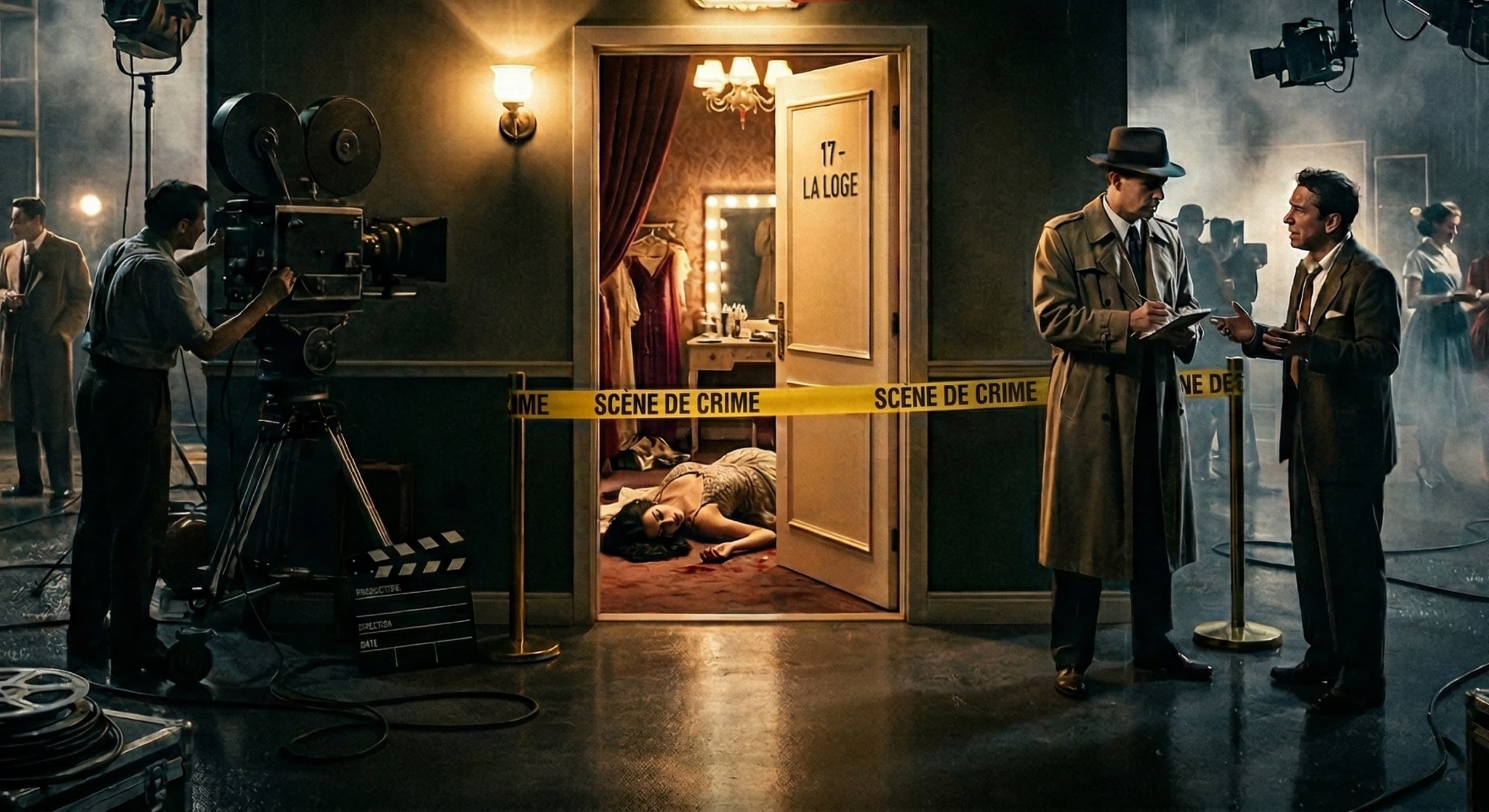
Hollywood Noir is the longest scenario in the catalog, announced at 2.5 to 3.5 hours, and ten is the count that justifies it. It is set on a 1950s film set where a movie star has been murdered, and the cast of a studio is a natural fit for ten suspects with reasons to be on set.
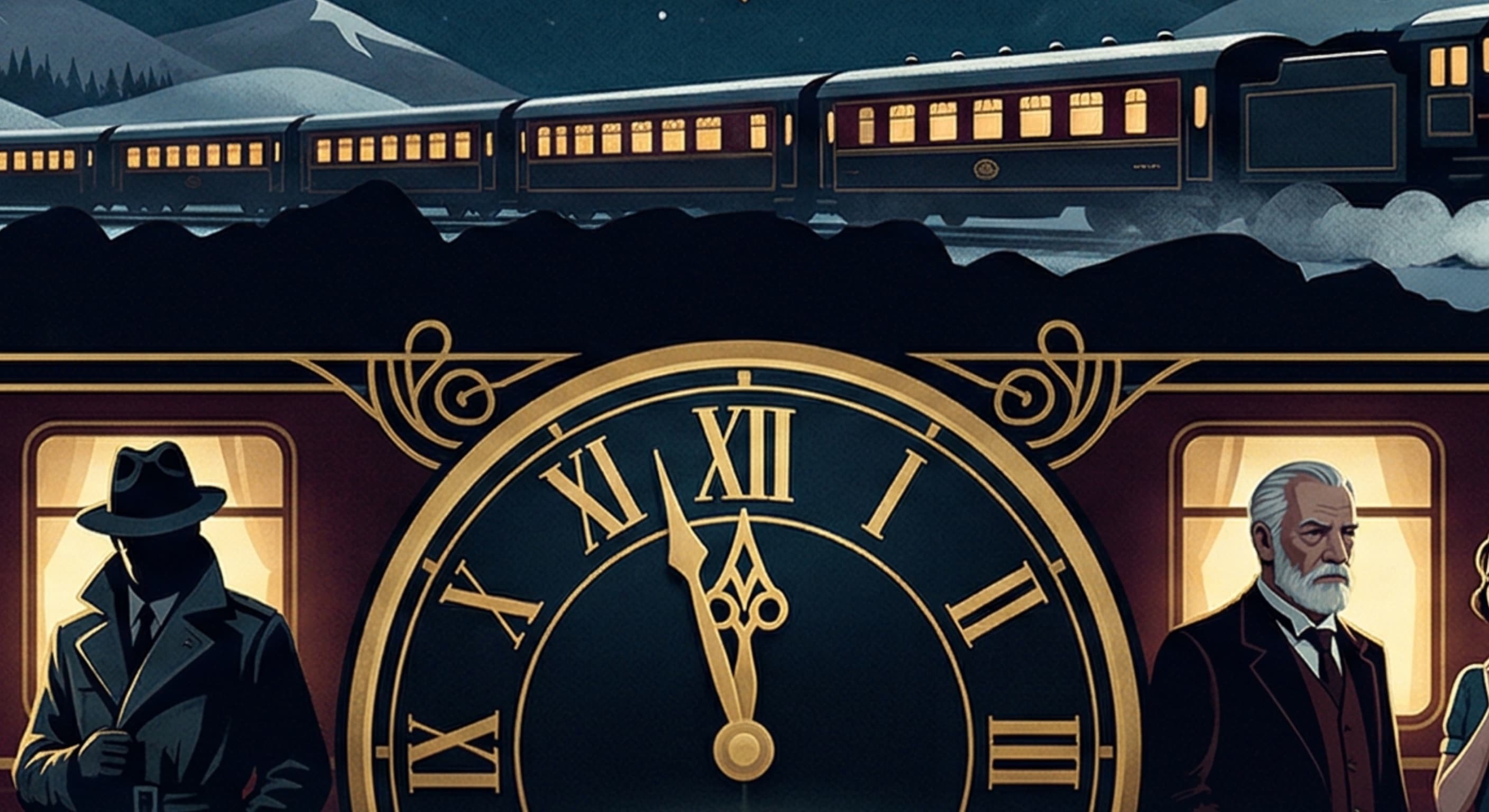
Choose it for a group that wants the whole evening and knows it. A group of ten that has played a two-hour kit before and finished wanting more is the right audience. A group of ten first-timers may prefer one of the 2 to 2.5 hour titles, which at ten will run close to the top of their range anyway: Murder at the Royal Casino, Crime Aboard the Orient Express, The Masked Ball or The Last Vintage.
At ten, plan Hollywood Noir as a full night: arrivals at 7:00 pm, the introduction at 7:30 pm, and the reveal around 10:30 pm or later. Put the end time in the invitation so nobody books a taxi for 10:00 pm.
Two or three conversation zones in the room
Ten players in one room produce a wall of noise in which nobody can hear the person in front of them. Split the space into two or three zones before anyone arrives. A dining room and a living room with the door open, or a large open-plan space marked out by furniture: the table at one end, a sofa in the middle, the kitchen counter at the other.
Each zone should hold three or four people comfortably, and the zones should be close enough that the host can call the room together without shouting. At ten, expect groups of three to form, and use the zones to make sure they re-form with different people in each round. A host who announces at the start of round two that everyone moves one zone to the left has solved the mixing problem in one sentence.
The table stays the anchor. Clues are handed out there, the introduction is read there, and the ballots come back there. Everything else happens in the zones.
The host's workload at ten and why a co-host helps
At ten, the host's list grows: read the introduction, play the non-player characters the story needs, hand out ten sheets and three rounds of clues, keep ten people to the clock, answer for the absent character if you are nine, collect ten ballots, read the solution. It is all doable alone. It is much easier with a second person.
A co-host takes the logistics: envelopes, the clue piles by round, the timer, drinks, moving people between zones. The host keeps the narration and the story. The co-host does not need to read the solution, and it is better if they do not: keep the solution with the host alone, and the co-host can take a character like any other guest if the count needs it. The host, who has read the solution, may only ever play a suspect who is not the culprit.
Brief the co-host the day before with the host guide open: the order of the rounds, when each clue goes out, and the end time. Twenty minutes is enough.
Dinner between rounds, not during
At ten, a plated dinner during a round is the single most common way an evening loses an hour. Ten people seated with plates do not get up to question anyone, and by the time the plates are cleared the round has evaporated. Serve food in the gap between round one and round two, and keep it to something that can be eaten standing or on a lap: a buffet, a board, a pot.
A workable clock for a 2 to 2.5 hour kit at ten: arrivals at 7:00 pm, introduction at 7:30 pm, round one to 8:15 pm, food until 8:45 pm, round two to 9:30 pm, dessert, round three to 10:10 pm, ballots and reveal by 10:30 pm. For Hollywood Noir, add thirty to forty-five minutes across the rounds.
The food break is where the theories get aired, and that is useful: players who have not spoken to each other trade what they know over the buffet, which is exactly the mixing the host wants. Let it run, then call round two from the table.
Nine players, and when to move up to twelve
Nine is the same tier and the same file. The host guide has you hand out one of the two roles that join at ten and leave the other in the story; choose the added role that suits your ninth guest and prepare the one-line answer for the absent one. Everything else in this article applies at nine.
Eleven is a different tier. The 11 to 12 player tier is $59 and the PDF is built for it at checkout, so if your list is at ten with two maybes, wait for the answers before you buy. The file arrives within seconds, so buying the day before costs you nothing in time.
Eight is the other direction, with every character of the first tier in play and a shorter night; a printable murder mystery for 8 players covers it. When the list passes ten, a printable murder mystery for 12 players explains what the top tier changes: two rooms, a co-host by default, and a real printing volume.
Frequently asked questions
How much does a printable murder mystery for 10 players cost?+
$49, the 9 to 10 player tier. One purchase covers the whole group, which is about $4.90 a head. The PDF is built for the tier you choose at checkout and emailed within seconds of paying by card; nothing is shipped, and there is nothing extra to buy for the tenth player.
Can 9 players use the 10-player kit?+
Yes, nine and ten buy the same 9 to 10 tier. The host guide tells you to hand out one of the two roles that join at ten and leave the other in the story as a guest. If a clue mentions the absent character, the host answers briefly for them. The solution does not change.
How long does a murder mystery party take with 10 players?+
Plan 2.5 to 3 hours of play for the 2 to 2.5 hour scenarios, because each player has nine people to question and rounds run forty to forty-five minutes. Hollywood Noir, announced at 2.5 to 3.5 hours, is a full evening at ten. Add thirty minutes for arrivals and the reveal.
Do I need a co-host for 10 players?+
Not strictly, but it helps. A co-host handles envelopes, clue piles, the timer and moving people between zones while the host narrates and plays the non-player characters. The co-host does not need to read the solution, and can play a suspect like any other guest as long as the solution stays with the host alone.
Which kit is best for 10 players?+
Hollywood Noir if the group wants a long evening: 2.5 to 3.5 hours, a 1950s film set, and a cast that suits ten suspects. For a first kit at ten, the 2 to 2.5 hour titles are safer: Murder at the Royal Casino, Crime Aboard the Orient Express, The Masked Ball or The Last Vintage. Every kit plays at 6 to 12 players.