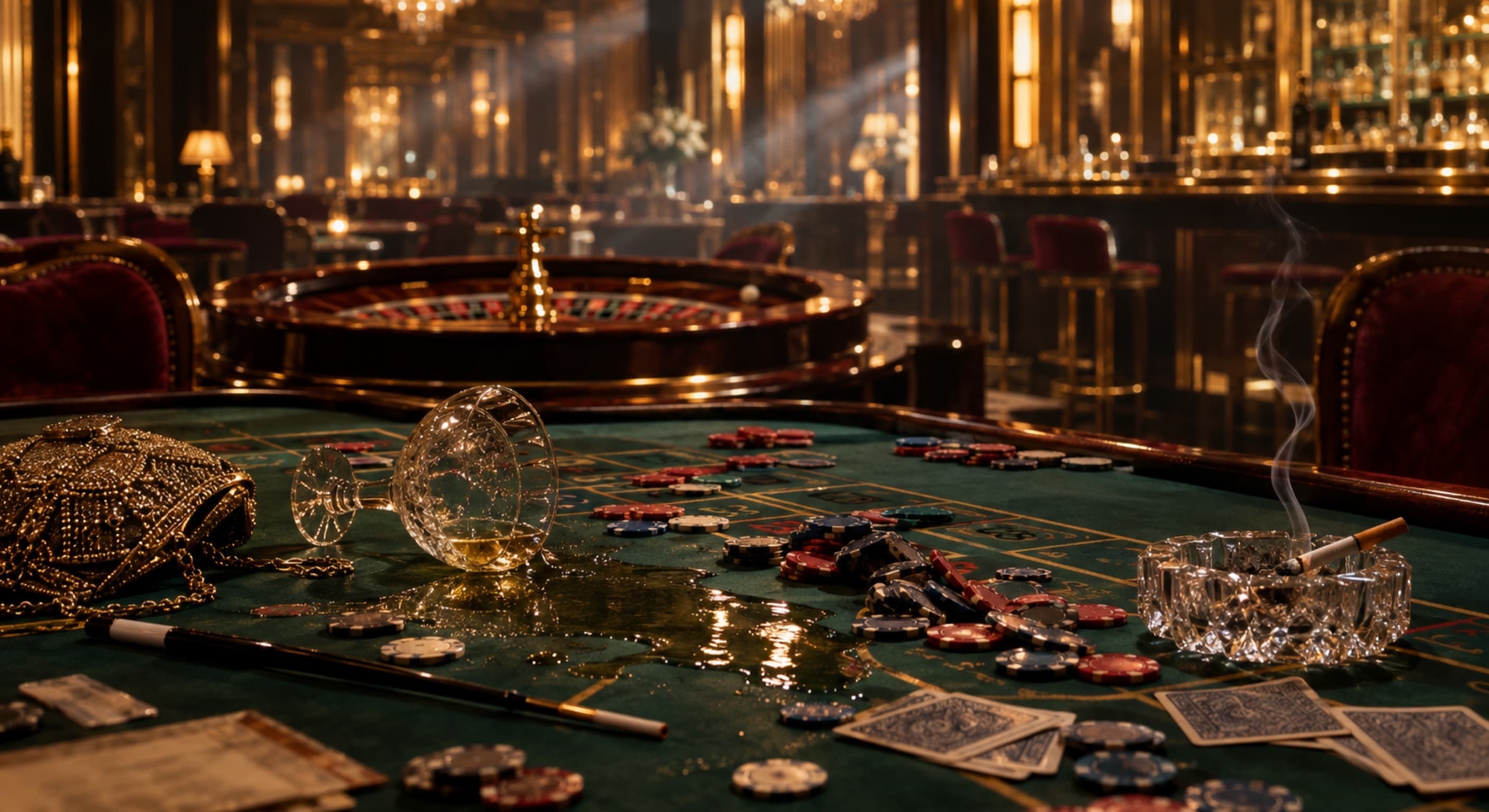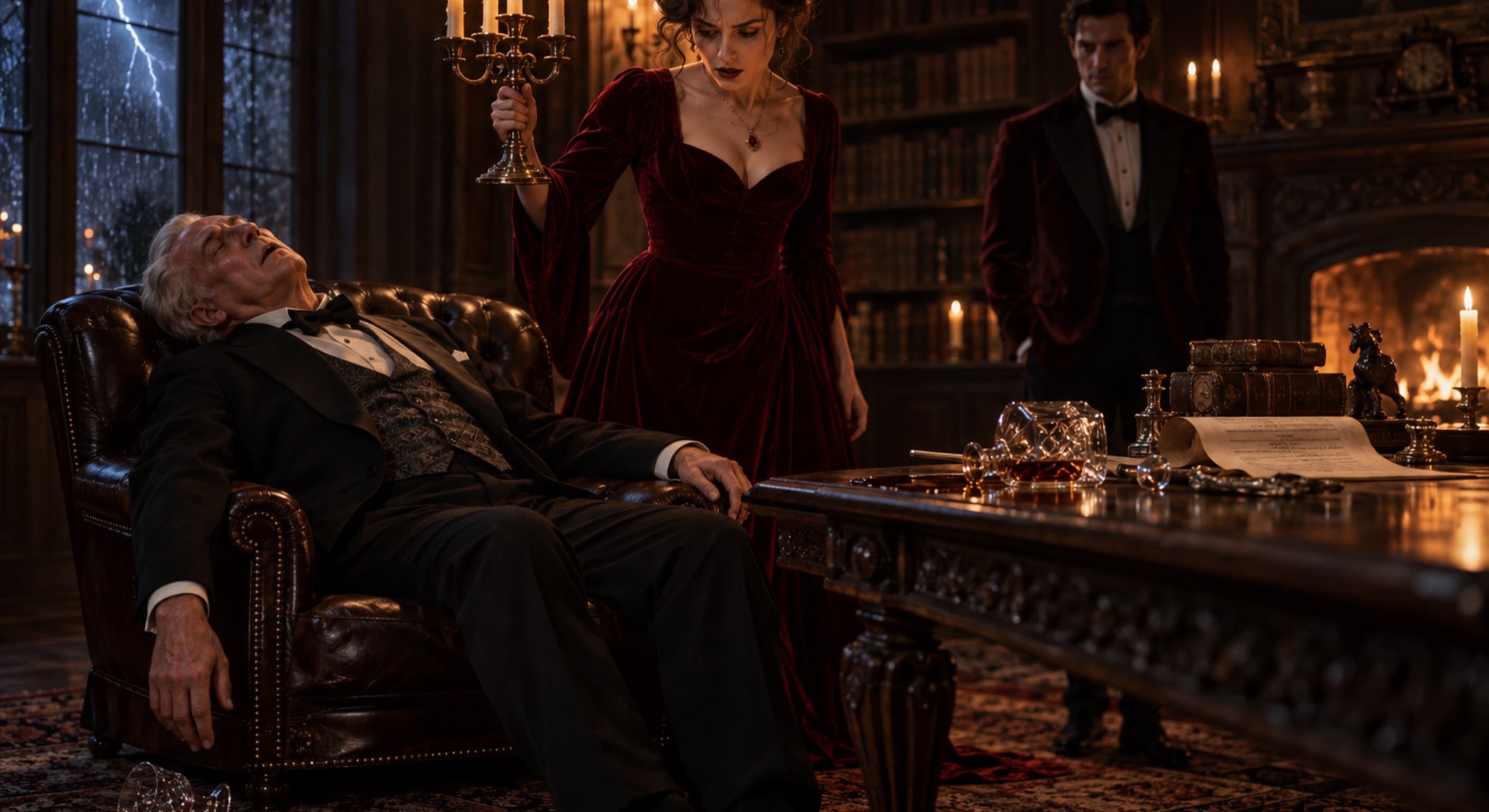
A system you replay against a story you play once
Clue gives you a fixed board, a fixed cast and a random answer. The fun is in the deduction loop, and it survives any number of replays because the solution is reshuffled each time. A printable kit gives you the opposite: a written crime with one true culprit, a motive, a timeline and a reveal. You play it once, and the second table you run it for is a different group of people meeting it fresh.
That makes them complementary rather than rival. A kit is an event; a board game is a shelf item. The four kits are on the murder mystery kits page.
Dice and cards against photographed documents
In Clue you gather information by moving and asking. In a kit you gather it by reading: a night report, a cloakroom register, a bar notebook, a statement, a contract, a newspaper page, all photographed one per page. Twenty-four exhibits in The Cursed Manor and Murder at the Royal Casino, thirty in Crime Aboard the Orient Express and Hollywood Noir.
Nothing is random. Two registers disagree because a clock ran fast, not because a die fell a certain way. When your table finally sees why, that moment belongs to whoever read carefully, and it cannot be handed to them by luck.
An hour against three hours
A board game round lasts under an hour, which is exactly what you want after dinner when nobody committed to anything. A kit runs about three hours: twenty minutes of silent reading, acts opened at set minutes, half an hour of negotiation, ballots, then the reveal.
That length is the price of the story. It also means a kit needs a date in the calendar and a host who has read the guide, while a board game needs a table and ten minutes. Judge the format by the evening you can realistically organise.
Three to six players against six to twelve
A board game tops out early. A kit is built for six to twelve players plus a host who does not play, and the price is $39.90 whatever the head count. For four people, neither answer is a kit: a cooperative case file from the detective case files page plays from one to seven investigators, with no host and no role.
So the head count decides almost everything. Four friends on a Tuesday: a case file or a board game. Ten friends on a Saturday with a date set two weeks out: a kit.
Who plays whom
In Clue nobody has a secret. Everyone is an investigator, and the suspects are cardboard. In a kit each guest is a suspect: a public card with a portrait and shared rules, a private sheet with what they know, what they may conceal, three useful conversations and a personal objective worth up to three points.
That is the real dividing line. If your friends would enjoy holding something back for three hours, a kit gives them the evening they want. If they would rather solve a puzzle without pretending to be anyone, take a board game or a case file: neither asks you to act. What an evening with roles actually looks like, hour by hour, is on the printable murder mystery kit page.
Frequently asked questions
Can you replay a printable murder mystery kit?+
Not with the same players, since they know the culprit. With a new group you can: the license allows reprinting the file for other private games, and the exhibits are documents rather than a performance, so a second table reads them exactly as the first did.
Which is better for four people?+
Neither a kit nor a board game is ideal. A kit needs six players and a host. For four, a cooperative detective case file works well: no roles, no host, from one to seven investigators, everyone on the same side.
Is a kit harder to learn than a board game?+
It has fewer rules, in fact. There is no board and no turn order: you read the documents you are given and talk. The host holds the schedule and the scoring, so players never learn a rulebook.