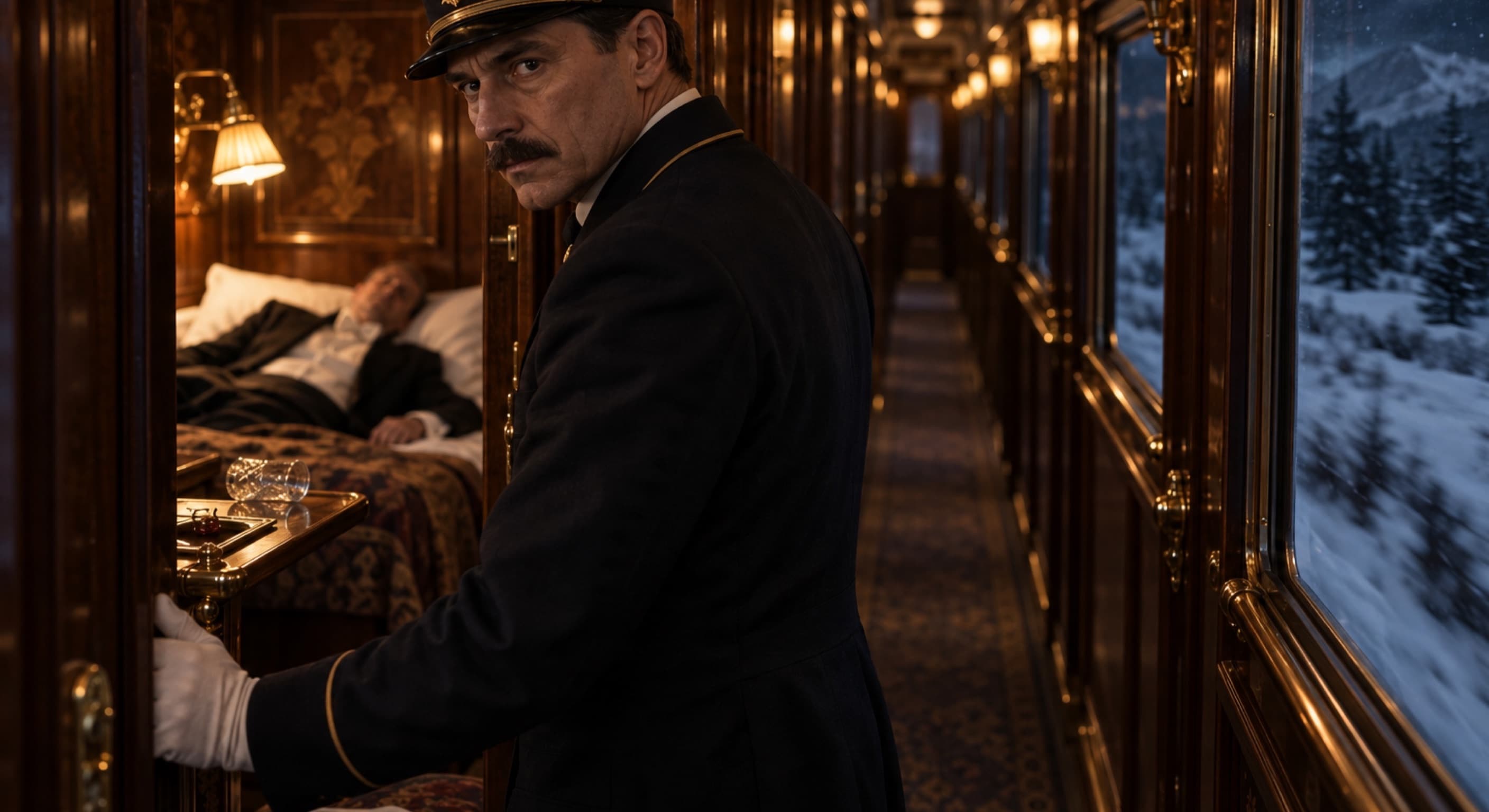
Watching actors against playing a suspect
At dinner theater the professionals carry the evening. You interrogate, you guess, you enjoy the performances, and the quality never depends on whether your friends are in the mood. It is the safe choice for a group that has never done anything like this.
A kit inverts that. Each guest receives a public card and a private sheet: what they know, what they may conceal, three useful conversations and a personal objective. Nobody has to act, and nothing is improvised on a stage, but the evening is only as good as the table makes it. The four files are on the murder mystery kits page.
A ticket each against one file for the table
Dinner theater charges per head, and the bill grows with the guest list. A kit is $39.90 for six to twelve players, which is about $3.30 a head at twelve, plus paper and ink. The file also stays yours: the license allows reprinting it for another private group, so a second evening costs almost nothing.
The hidden cost of the kit is time. Somebody prints fifty or fifty-six pages, sorts the exhibits into folders by act and reads the host's guide beforehand. That is roughly two hours of work that a ticket buys you out of.
A venue against your dining room
A venue gives you a room, service and no washing up. It also gives you a fixed date, a fixed menu and a table you do not control. If half your group is late, the show starts anyway.
At home you set the hour, the food and the lighting, and you can stop for twenty minutes if the main course needs attention. What you need is space: a table that seats your head count plus the host, and a corner where two people can negotiate an objective without the whole table listening.
What each format cannot do
Dinner theater cannot give your guests secrets. You are an audience with questions, not a suspect with something to hide, and the ending is the same whoever bought the tickets.
A kit cannot give you professional performers, and it cannot absorb a guest who arrives an hour late: the twenty minutes of silent reading at the start are load-bearing. It also cannot run itself. Somebody has to sit out as host, release the exhibits at set minutes and read the reveal.
The middle option, if you want both
There is a format between the two: a scenario written around your own guests, with their real names, your anecdotes and your setting, for up to twenty-five players. You still print it and still run it yourselves, but the text is unique to your group, which is the part dinner theater cannot offer at any price.
It is $219 up to fifteen players and $279 up to twenty-five, with the outline submitted for approval and the print-ready PDF delivered within 72 hours of the brief being approved. See the custom murder mystery page, and the printable murder mystery kit page for what hosting one involves.
Frequently asked questions
Is a printable kit cheaper than dinner theater?+
Almost always, because you pay once for the table rather than per seat: $39.90 for six to twelve players, about $3.30 a head at twelve. What you pay instead is time, roughly two hours of printing, sorting and reading the guide.
Do guests have to act in a printable murder mystery?+
No. Nothing in the file asks anyone to perform a scene. Each person gets two printed pages and talks to the others about what the documents say. The host handles the pacing and the scoring.
What if we want the evening written about our own group?+
That is the custom scenario: your guests' real names, your anecdotes and your setting, up to twenty-five players, $219 up to fifteen and $279 up to twenty-five, delivered as a print-ready PDF within 72 hours of brief approval.