The cooperative version, and why
A case file has no roles and no host. Everything is available from the start, nothing is sealed, and every person at the table reads the same evidence. That removes the two things that make family game afternoons go wrong: somebody having to organise, and somebody having to lie to their mother.
One to seven investigators, $39 a file and $49 for The Phantom Affair. The catalogue, with run times and exhibit counts, is on the detective case files page.
A long Victorian afternoon
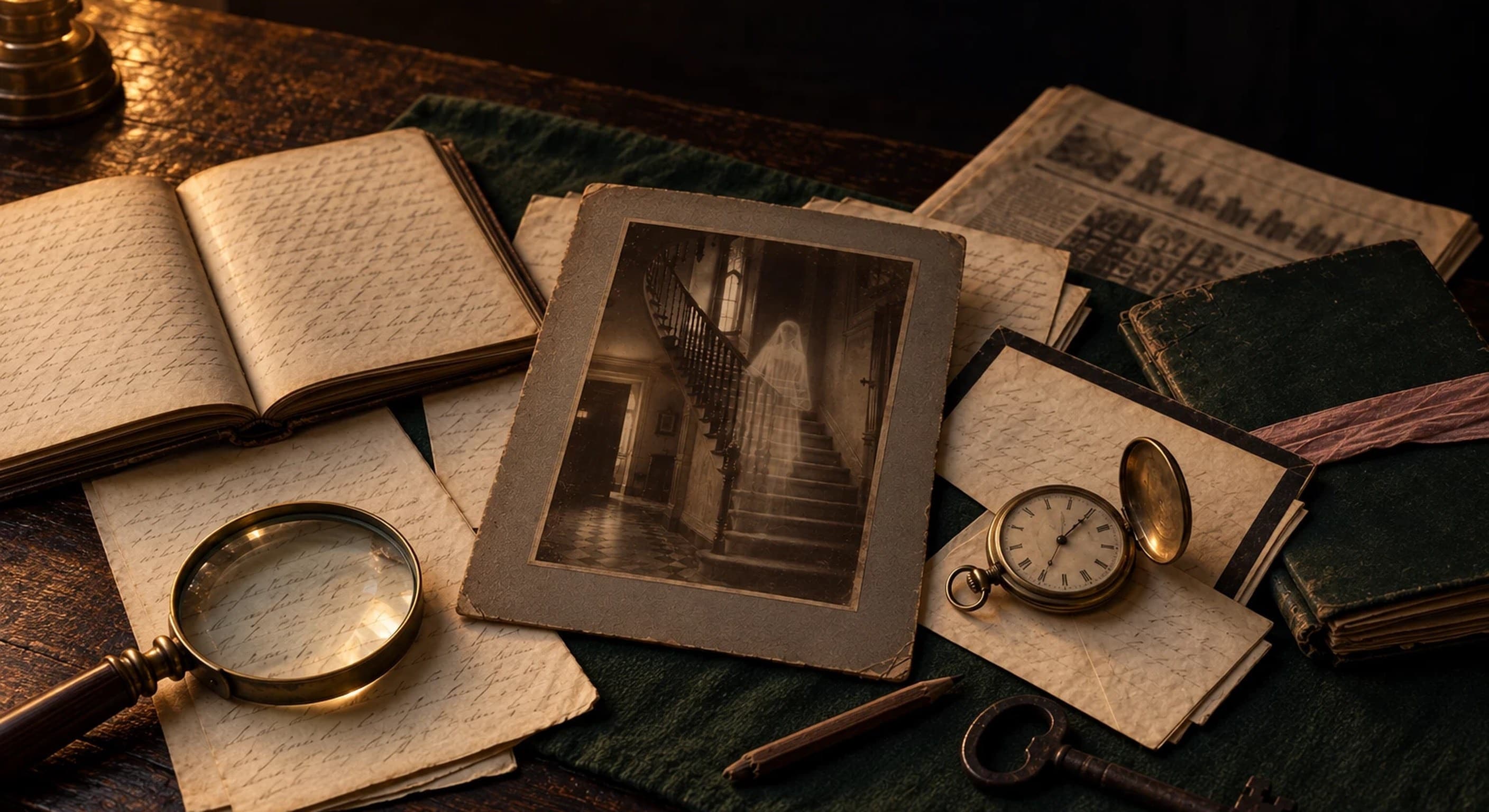
The Phantom Affair is the one to open if you have the time: a manor in 1890, paranormal in atmosphere and entirely rational in solution, twenty-four exhibits, no cipher to decode. Everything turns on cross-checking documents.
Three to four hours, thirty-one pages to print. It is a difficult case, rated at the top of the scale, which is the right choice for a family that likes to take its time over lunch and then argue about a timeline.
A shorter option
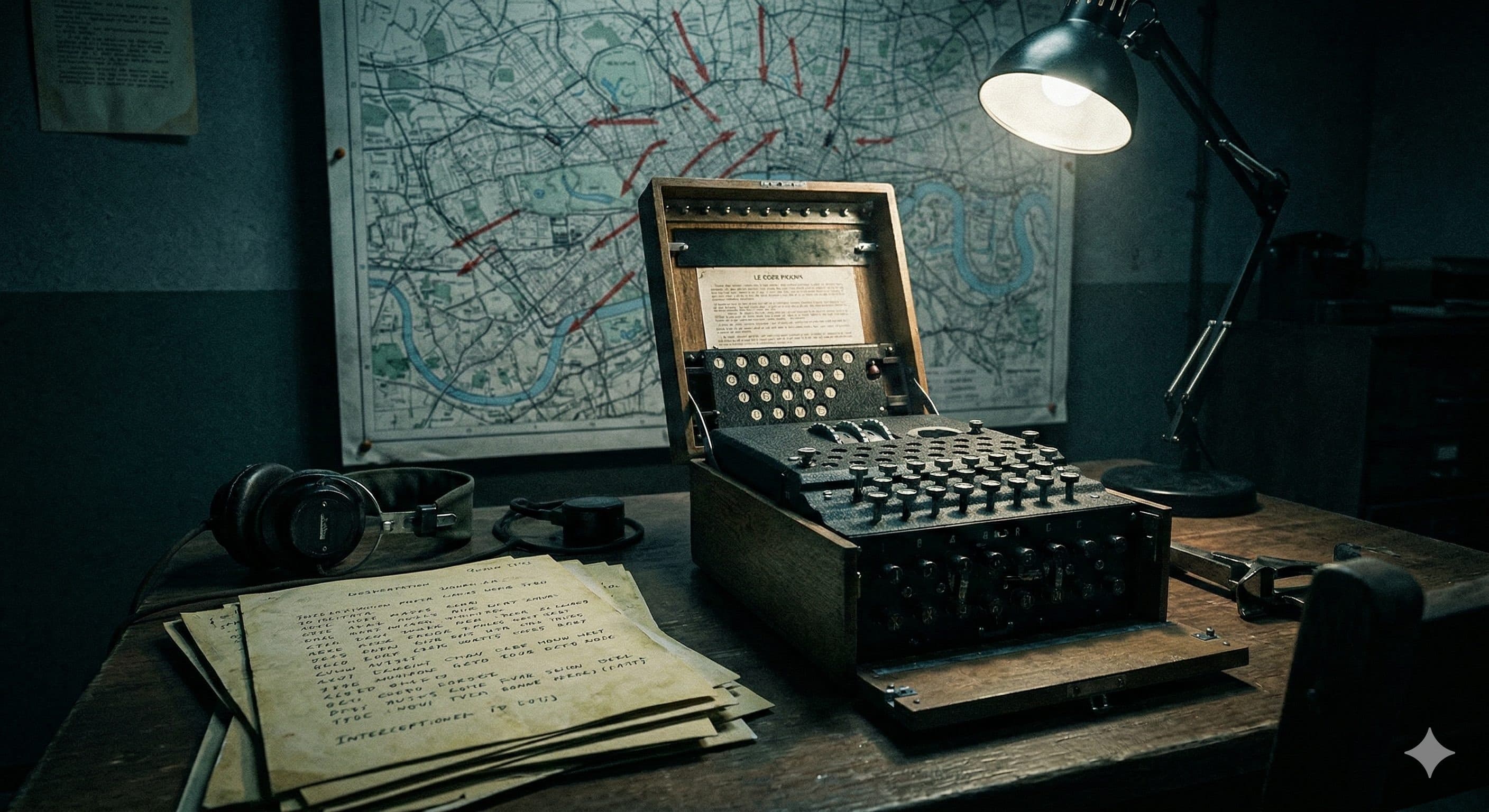
If the afternoon is tighter, take The Heist of the Century: seventeen exhibits, five puzzles, one and a half to two hours, twenty-four pages, and the only mid-level case in the catalogue. A family that has never done this gets to the answer without opening a hint.
Vanished in Paris is the middle ground: a starred chef disappears, twenty-four exhibits, no cipher, three to four hours of pure cross-checking, thirty-one pages.
How a family of five works a case
Spread everything at the start. Split the exhibits by type, a few each, read in silence for ten minutes, then say out loud what you are holding before swapping. One person keeps the sheet of times, another the table of people, a third takes free notes: all three sheets are printed in the file.
Rotate documents every ten minutes. The commonest mistake is one person holding an exhibit too long, because in these files a document is only worth what it contradicts.
What to have on the table
Space, first: a case file is spread out, so a dining table cleared after lunch beats a coffee table. Then pencils, an eraser and scrap paper, since the working sheets are meant to be written on and corrected.
Print A4 single-sided at 100 percent, or tick fit to page on US Letter. Colour renders the photographed documents better and black and white stays legible, because no deduction depends on a shade. And put a lamp on the table: some exhibits are handwritten.
If the family would rather each hold a character than all work together, the other format is the printable murder mystery kit, which needs six to twelve players and somebody willing to host.
Frequently asked questions
Does someone have to organise it?+
No, and that is the point of the cooperative format. A case file has no host and no roles: everything is available from the start and the whole table reads the same evidence together, from one to seven investigators.
Which case suits a long afternoon?+
The Phantom Affair: a manor in 1890, twenty-four exhibits, no cipher, three to four hours, thirty-one pages. For a shorter session, The Heist of the Century runs one and a half to two hours and is the only mid-level case.
What do we need on the table?+
A cleared dining table, pencils, an eraser and scrap paper, plus a lamp: the working sheets are made to be written on and some exhibits are handwritten. Print A4 single-sided at 100 percent, or fit to page on Letter.