Forensic means the detail decides, not the confession
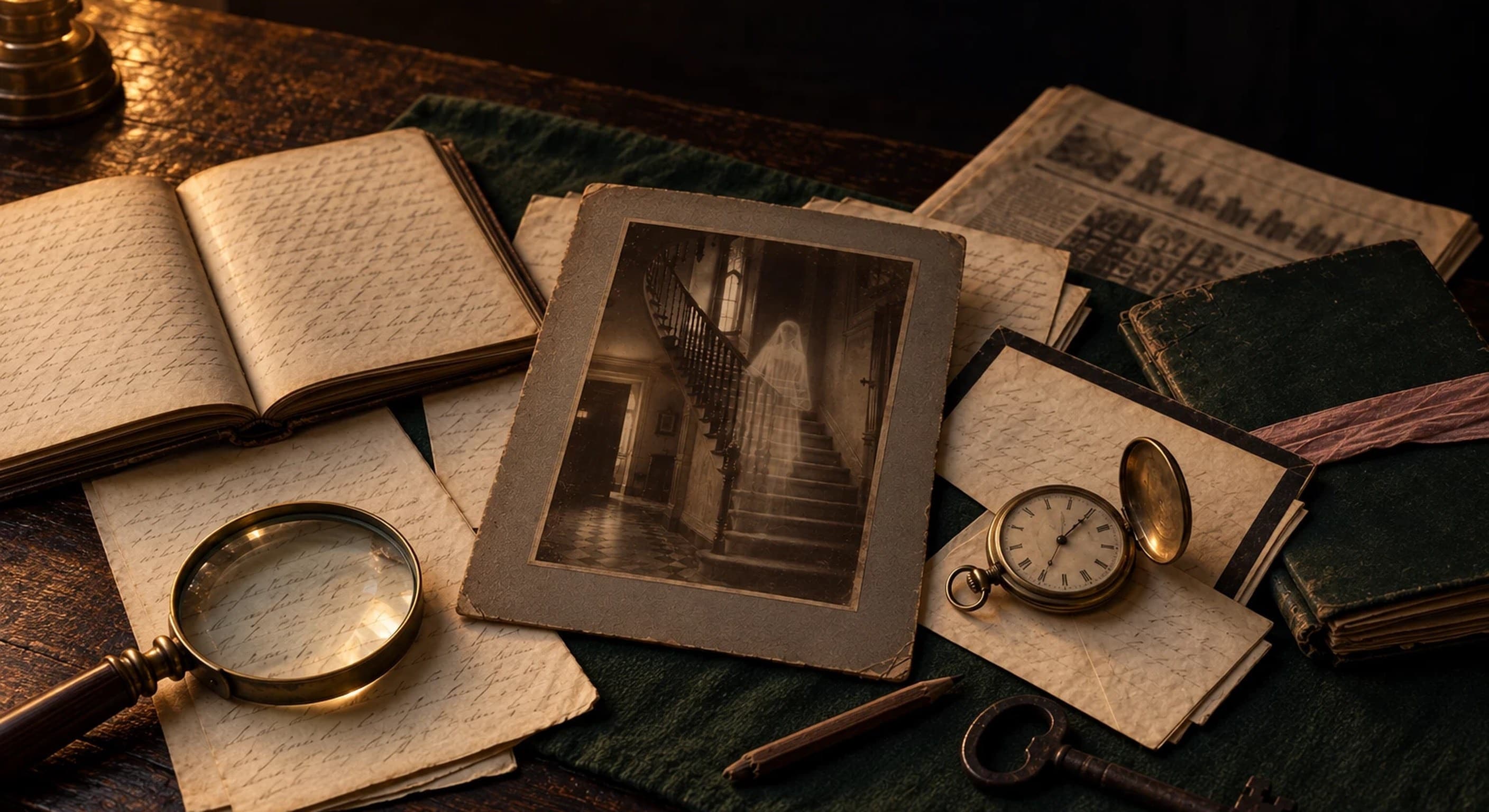
In these files nobody confesses, and no expert character announces a conclusion. What you get is documents: a night report, a register, a statement, a laboratory record, a wage slip, a newspaper page, photographed one per page. Two of them disagree, and the disagreement is the evidence.
That is the difference between a forensic case and a themed one. A themed case says that the coroner found something. A forensic case gives you the record and lets you see it for yourself. The catalogue is on the detective case files page.
Marks that are not the same age
The clearest example is The Cursed Laboratory: a geneticist is found dead in an underground laboratory in Lyon on 12 March 2026, with two puncture marks that are not the same age. One of them is older than the night in question, which quietly removes a whole set of explanations and points at a relationship rather than an intruder.
Ten exhibits, six puzzles, one to six investigators, two to two and a half hours, seventeen pages. Nothing about the deduction requires medical knowledge: the age difference is stated in a record, and the work is in seeing what it rules out.
Clocks that disagree, which is the oldest forensic trap
Two files turn on time recorded by an instrument nobody checked. In The Winter of '74, a cold case at the Grand Hotel des Neves on 12 January 1974, two clocks do not give the same time, and a cipher key is computed from three wage slips. In Murder at the Royal Casino, the same problem sits inside a 1927 evening: a register gives an hour that another document contradicts.
When a table finally converts the times properly, half the statements change meaning at once. That moment is what people describe afterwards, and it cannot happen in a game where the times are simply narrated.
Chain of custody, in practice
The other forensic habit these files reward is following an object rather than a person. Who owned it, who borrowed it, when it became reachable, where it was recovered. A cape worn by someone other than its owner. A bracelet that proves a visit without proving an act. A key that only existed in one place for one hour.
The accusation ballot at the end of a murder mystery kit asks for exactly that chain, and the host scores it out of twenty. Citing an exhibit without explaining the link earns nothing, which keeps the reasoning honest.
How to work a table through it
Spread everything out. In a case file nothing is sealed and all the exhibits are available from the start, so split them by type, read in silence for ten minutes, then say out loud what you are holding before swapping. Rotate documents every ten minutes: an exhibit is only worth what it contradicts.
Keep a sheet of times and a table of people going from the first minute, in pencil. Both are printed in the file. Groups that skip them spend the last hour re-reading documents they already had, which is the single most common way a forensic evening goes slack.
Frequently asked questions
What makes a mystery forensic rather than just themed?+
The physical detail decides the answer. Nobody confesses and no expert character announces a conclusion: you get the records themselves, photographed one per page, and two of them disagree in a way you have to notice yourself.
Which case has the strongest forensic reasoning?+
The Cursed Laboratory, where two puncture marks of different ages rule out whole explanations, and The Winter of '74, where two clocks disagree and a cipher key is computed from three wage slips.
Do I need to be an expert to enjoy it?+
No. Everything required is printed, including the tables and cards needed for the puzzles. The work is careful reading and comparison, and the working sheets in each file guide it without any technical background.