Eight to twelve friends, a potluck and a Saturday in mid-November: the friendsgiving murder mystery
Friendsgiving has a shape of its own. It happens the Saturday before Thanksgiving, because the Thursday belongs to family. The guests are the friends who live in the same city, usually eight to twelve of them, and the food is a potluck: every dish arrives cooked, the host's oven does the reheating, and everyone sits at one long table or two pushed together.
That shape fits a kit. A murder mystery kit plays with 6 to 12, sold by tier: $39 for 6 to 8 players, $49 for 9 to 10, $59 for 11 to 12. One purchase covers the table, the PDF arrives by email within seconds of payment, nothing is shipped, and it prints at home in color or in black and white. Inside are a host guide with the introduction to read aloud, one character sheet per player, clues organized by round, secret ballots for the accusation and the solution for the host only.
The potluck solves the biggest hosting problem in advance: nobody is at the stove during a round, because the cooking happened in eight different kitchens that afternoon. The printable murder mystery kit page lists the contents in detail.
Rounds between courses, not during them
Three courses, three rounds, alternating. The starter goes on the table, then round one. The plates are cleared, the main dishes come out of the oven, everyone eats, the plates are cleared again, then round two. Pie, then round three. Coffee, then the ballots. A round played over a full plate turns into dinner, and a course served in the middle of a round kills the round, so the host keeps the two apart with a clear announcement each time.
At friendsgiving the rounds happen at the table, seated, because everyone is already there and the table is where the conversations cross. Round one can run standing, drinks in hand, while the starter is being set out, which gets the introductions done before anyone sits. Rounds two and three run seated: the host calls a character, that player puts their questions to the table, and the host calls the next.
Clearing is part of the game. Assign it to two guests per course before the evening starts, so the host is free to hand out the next round's clues while the table is being cleared and the next dish is coming out.
The Last Vintage: a harvest party gone wrong
The Last Vintage is set at a Saint-Emilion estate in October 1985, at the party for Château Castellac's sixtieth vintage. The master of the estate raises his engraved glass in front of his family, the wine merchants and the press, and an hour later he collapses among the barrels: the poison came from the garden, and everyone that night had a reason to drink to his death. Contested inheritances, ongoing lawsuits and cellar secrets do the rest.
For a friendsgiving, the parallel does the decorating. A harvest table, bottles down the middle, dishes that arrived from eight kitchens, and a story that starts with a toast at a harvest party. Read the introduction, then ask one guest to raise a glass before round one, and the room will get the joke without help.
It runs 2 to 2.5 hours, which fits between 6:00 pm and 10:00 pm with three courses in the gaps. Dress is a dinner outfit, nothing more, and the one prop worth bringing is a bottle of Bordeaux per guest, which is also the potluck contribution for the friend who does not cook.
The Cursed Manor for a colder night
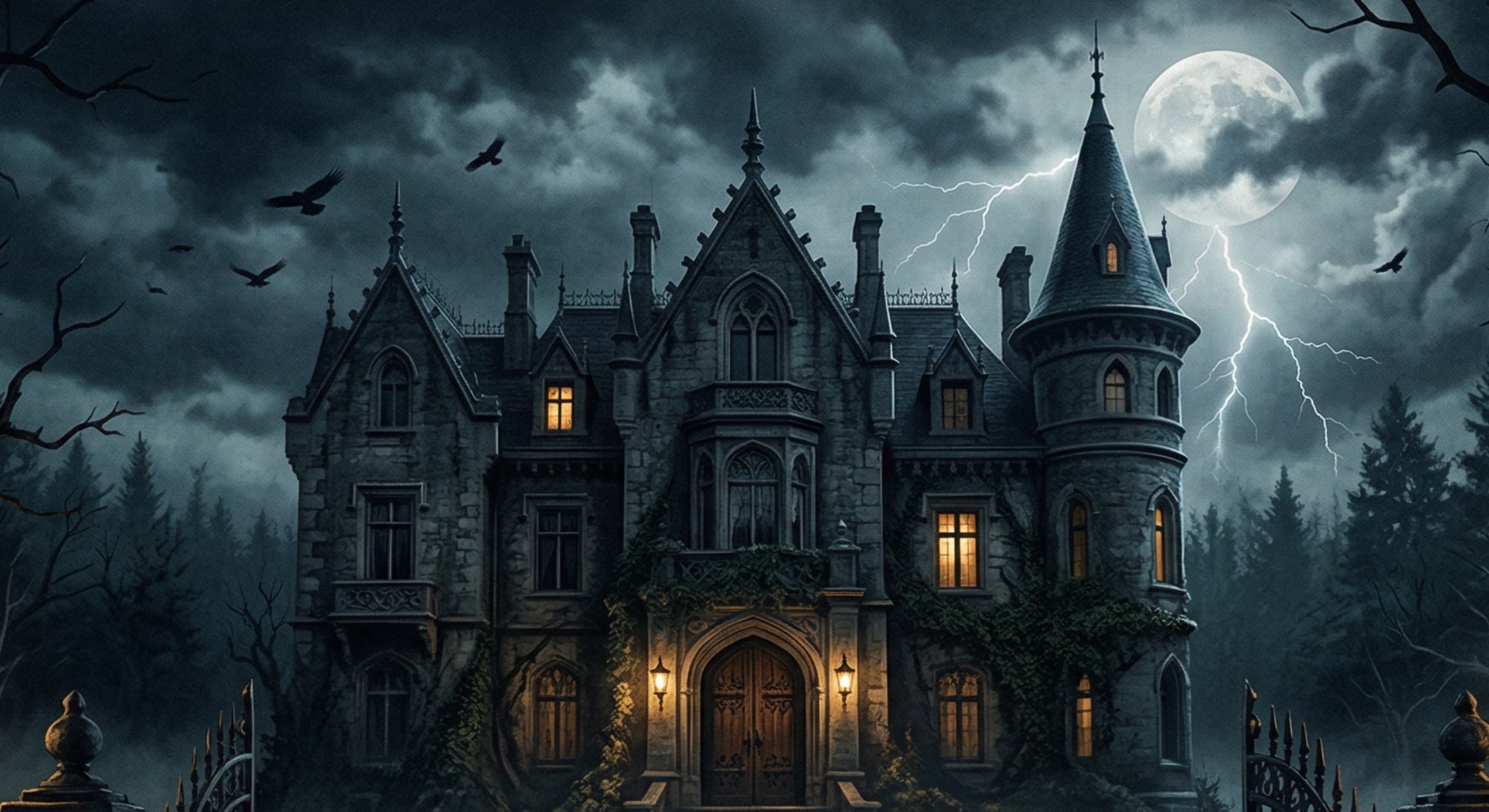
When friendsgiving lands in a city apartment where it is dark at 5:00 pm and the windows are rattling, The Cursed Manor fits the weather. A stormy night at Noirval Manor, old Count Edmond about to read his will, found collapsed in the library with a glass of cognac in his hand, the roads cut off, and the killer among the heirs. Greedy relatives, old family secrets, quiet betrayals.
It runs about 2 hours, among the shortest of the seven kits, which leaves more room for the food. Candles on the table and the lights down are the whole set, and a gothic story asks for no costume at all.
Between the two, choose by the room and the group. A bright kitchen with a long table and wine drinkers takes The Last Vintage. A dark living room with a fireplace and friends who like a ghost story takes the Manor. Both play with 6 to 12, both contain the same materials, and both put the host in the role of narrator, voicing the non-player characters.
Assigning roles when half the table cooked
At a potluck, the cooking is finished before the doorbell, so the cooks can play like everyone else. The exceptions are the host, who reheats and carves, and the friend who arrives late with the turkey still in the car. Give those two the lightest jobs in round one and never the roles the plot depends on.
The host is the narrator: reads the introduction, hands out the clues at the start of each round, plays the non-player characters, collects the ballots and reads the solution. The host guide allows a suspect role that is not the culprit on top of that, and at a friendsgiving the host usually takes one, because the table wants everyone in the story. Keep it a role with a fact or two to deliver and little to hide, so carving the turkey in the gap does not lose a plot thread.
The late friend cannot be the culprit or the key witness, since both are always in the room. Give the culprit to the reliable friend who enjoys pressure, and give the character with the most to hide to the friend who brought a pie and nothing else. The rest is the usual rule: the talkers get the secrets, the quiet ones get concrete information that the others must come and ask for.
A schedule from 6:00 pm to 10:00 pm
This timeline is for ten friends, The Last Vintage and a potluck of three courses.
6:00 pm, arrival, dishes into the oven, envelopes handed out at the door
6:20 pm, fifteen minutes of reading, a drink
6:35 pm, everyone at the table, the host reads the introduction, a toast
6:40 pm, the starter is set out, round one standing or seated
7:15 pm, plates cleared, main dishes served
7:50 pm, table cleared, clues for round two handed out, round two seated
8:25 pm, pie on the table
8:40 pm, clues for round three, round three
9:15 pm, coffee, secret ballots written at the table, each accusation heard out loud
9:25 pm, the reveal, then the sheets are compared
9:45 pm, leftovers boxed, coats
The gaps are generous on purpose, because a potluck runs on other people's dishes and the oven is never as fast as promised. If the evening is late, shorten the coffee, never round three: the third round is where the ballots are decided. If the group is twelve and the kit is the Manor at about 2 hours, the same timeline ends twenty minutes earlier.
Tier, price and what to print the week before
Count the friends who replied yes. Eight is the $39 tier, under $5 a head. Nine or ten is the $49 tier, and the guide to a printable murder mystery for 10 players covers that table. Eleven or twelve is the $59 tier. Buy after the replies, because the PDF is built for the tier chosen at checkout, and if a friend drops out on the day, the host guide's section on adapting the game to your number of players says which role stays in the story as a guest.
The week before:
Print the host guide first and read it once, start to finish
Print one character sheet per player, seal each in an envelope with the character name
Print the clues, sort them into three envelopes marked by round, and the ballots, one per player
Write place cards with the character names, since the kit does not include them
Assign two clearers per course and tell them
The family version of the same weekend is a different evening: the article on a murder mystery for Thanksgiving weekend covers the Friday with relatives, and the guide to a printable murder mystery for the holidays covers the December table that follows a month later.
Frequently asked questions
How is a friendsgiving murder mystery different from a Thanksgiving weekend one?+
The room. Friendsgiving is eight to twelve friends of the same age at one table on the Saturday before or after Thanksgiving, with a potluck, so the rounds sit between courses and everyone can play. The Thanksgiving weekend version is family across generations on the Friday, with leftovers and children who do not play. Same kits, different casting and pacing.
What if the head count changes on the day?+
The host guide has a section on adapting the game to your number of players. It hands out a core cast of six roles first, then names the roles that join at eight, ten and twelve, so a table of ten that becomes nine leaves one role in the story as a guest, and the host answers briefly for that character if a clue mentions them.
Can we play the rounds while we eat?+
Better not. A round over a full plate turns into dinner and a dish served mid-round ends the round. Alternate instead: starter then round one, main course then round two, pie then round three, coffee then the ballots. The host announces each switch, and two guests per course clear the table while the clues go out.
Do we need to dress up for a friendsgiving murder mystery?+
No. A dinner outfit is the costume for The Last Vintage, and The Cursed Manor asks for nothing at all. If the group likes it, one accessory per guest is enough, a scarf or a hat, and it helps twelve people remember who is who by round two. Say the level in the invitation so nobody overdoes it.
Can we do it again next year?+
Yes, with a different kit, because the same friends will know the ending. There are seven kits, and the file you bought stays yours under a personal license for private games, so it can be reprinted for another group of friends. A second friendsgiving with the Manor after a first with The Last Vintage is the usual sequence.