Three printable formats, and why the difference matters
A fully scripted murder mystery party hands every player a booklet of lines. The host calls a scene, each player reads their part in order, and the plot advances exactly as written until the murderer reads a confession on the last page. Nobody has to think on their feet, and nobody can steer the story either. It is closer to a play reading than a game.
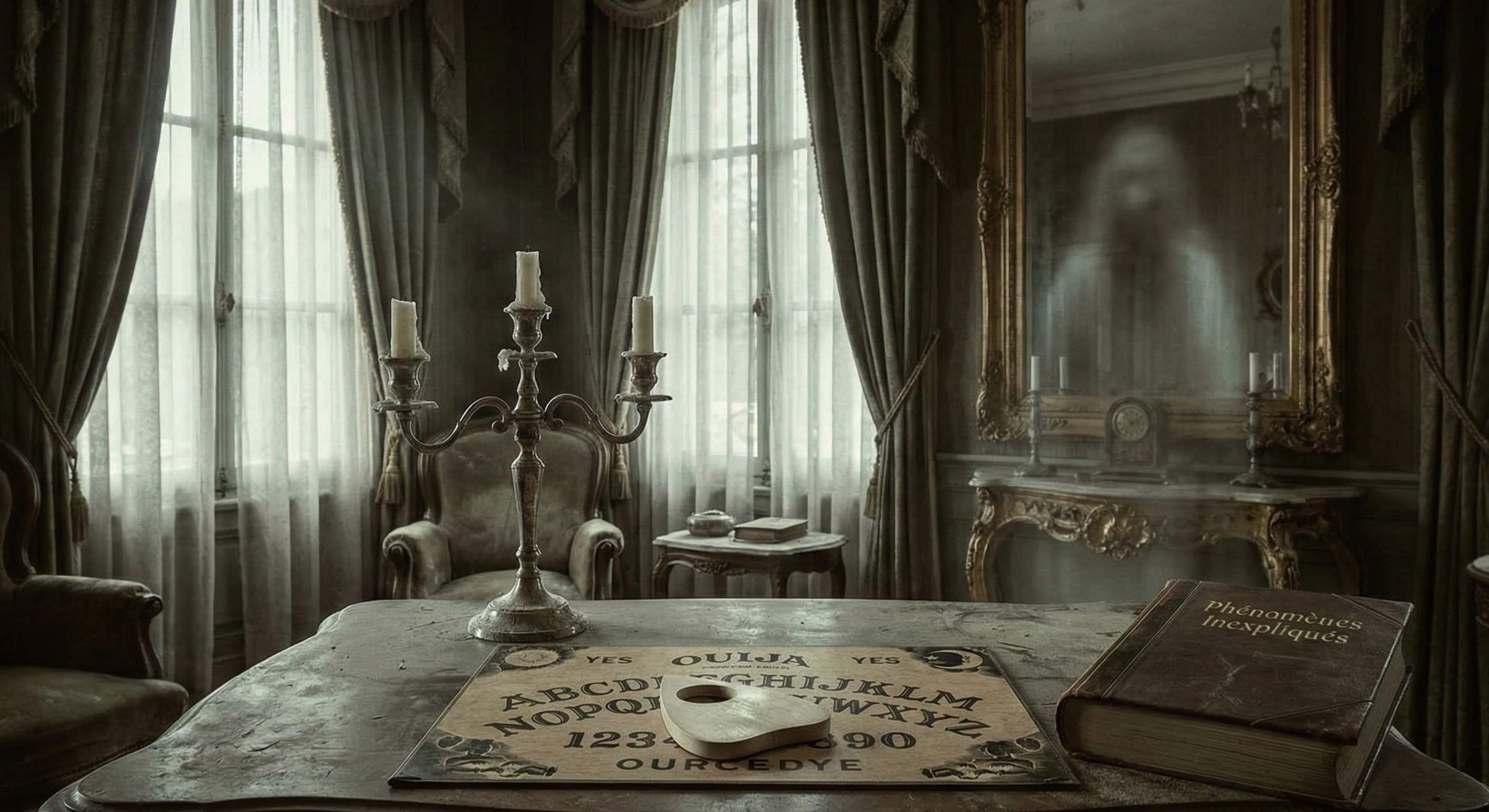
A pure improv murder mystery game starts from a premise and a few prompts: a setting, a victim, maybe a list of character names. Players invent their own backstory, their own alibi and often their own motive. It is loose, funny in the right hands, and it collapses when nobody wants to lead. The solution is frequently decided during the evening rather than before it.
The third format sits between the two. Each player holds a character sheet with a fixed identity, an objective and secrets, plus a short list of what to reveal in each round. The host reads a few passages aloud. Everything else, the questions, the alibis, the deals struck in a corner of the kitchen, is improvised by the players from those fixed facts. This is the format every printable murder mystery kit from Murder to Order uses.
What a Murder to Order kit asks of each player
Nothing to memorize and nothing to perform. Each player receives one character sheet that says who they are, what they want tonight, what they are hiding, and what they should reveal round by round. The sheet stays in their hand for the whole evening. When another guest asks a question, the player answers in their own words, using the facts on the page.
The only rule is that a player may not contradict the sheet. Inventing a harmless detail, a favorite drink or an opinion about the victim, is fine and makes the character feel alive. Inventing an alibi the sheet does not give you is not, because the other players need the real facts to solve the case.
The culprit is not asked to lie in the dark either. Their sheet tells them what happened and what to admit or deflect, which is why a nervous player can carry the role without falling apart. That mechanism is explained in does the murderer know they did it. Recommended age is 14 and up, and there is no graphic violence in any scenario, so a teenager at the table is asked to talk, not to perform a death scene.
What the host reads aloud, and what the players invent
The host guide contains three things to read: the introduction that sets the scene and announces the crime, the short bridging passages between rounds, and the solution at the very end. Read aloud, all of it takes under ten minutes across the night. The rest of the guide is the run of the rounds, which tells the host when to hand out each set of clues and when to distribute the secret ballots.
The host also voices the non-player characters, the staff and bystanders who are in the story but not played by a guest. When a clue mentions one of them, the host answers briefly in their place. That is the extent of the host's acting.
Players invent everything that is not written down: the tone of voice, the alliances, who they corner first, how much of a secret they trade for information. A quiet table produces a careful, procedural investigation. A loud table produces accusations by round two. Both reach the same sealed solution, because the facts do not move. That is what separates this format from a scripted murder mystery party, where the pace is set by the page, and from pure improv, where the facts are set by whoever talks loudest.
Scripted vs improv murder mystery: which format suits shy groups?
Shy guests worry about two things: being watched and being stuck. A fully scripted game solves the second problem and makes the first one worse, because every line is read in front of the whole room, in turn, with everyone waiting. Pure improv is the hardest format for an introvert, since there is no safety net at all.
The character-sheet format is the kind one. Conversations happen in clusters of two or three, not on a stage. A shy player has a concrete job, three or four facts to deliver over the evening, and can do it in a normal voice while holding the sheet. Nobody is called to the front. A host can walk a clue over to someone who has gone quiet, which gives that person a reason to be approached instead of having to approach.
If your list includes someone who has already said they hate acting, read murder mystery party without acting for shy guests before you send the invitations. Cast that person as a character with clear, factual information to share and few secrets to protect. In the scripted vs improv murder mystery debate, that casting choice matters more than the format label.
Theatrical groups, families and coworkers: matching the format to the room
A theatrical group finds a fully scripted game constraining, because the lines are fixed, and finds pure improv thin, because there is nothing to push against. Character sheets give them a skeleton to dress up. A guest who wants to do an accent, a costume and a dramatic exit can do all three, and the fixed facts on the sheet keep the show from swallowing the mystery. The three rounds and the final ballot bring even the biggest ham back to the plot.
A family evening with teenagers works best in the same format. A 14-year-old handed a script reads it in a monotone; handed a sheet with a secret, they guard it.
Coworkers are the group most likely to be put off by a bad format. Reading lines in front of a manager is uncomfortable, and pure improv rewards the office extrovert while everyone else watches. A sheet-based kit keeps dignity intact: each person talks to two or three colleagues at a time, nobody performs, and the secret ballot gives the night a clean, fair ending. The murder mystery team building page covers group sizes for a work event.
How each format reaches the solution
In a scripted game the solution is printed in the last scene, and the murderer usually reads their own confession. There is no accusation to get wrong, only a reveal to read. In pure improv the solution is often settled by a vote or by the host on the spot, which means the evening can end with a murderer who did not know they were one until thirty seconds earlier.
A Murder to Order kit fixes the solution before anyone arrives. The clues are organized by round, three rounds as a rule, and each round narrows the field. After the third round the host hands out the secret ballots, every player writes down a suspect, and the host reads the solution, which nobody else has seen. The culprit knew all along and played accordingly.
That structure is why the format rewards deduction rather than volume. A player who listened in round one and cross-checked a clue in round three can beat the loudest person in the room. It also means the reveal is a genuine reveal: the host reads a passage written to explain every clue, not a summary improvised from what the table decided.
Choosing a printable kit by format before you choose a theme
Decide the format first and the theme second. If your group would rather read than talk, a scripted game is an honest choice, and it is not what Murder to Order sells. If your group has three improv veterans and nobody else, a pure improv evening will belong to the three. For almost every other table of 6 to 12 adults or teenagers, the character-sheet format is the one that gets everyone involved.
All seven kits on the murder mystery kits page use it: The Cursed Manor, Murder at the Royal Casino, Crime Aboard the Orient Express, Hollywood Noir, The Cursed Island, The Masked Ball and The Last Vintage. They run from about 2 hours to 3.5 hours, cost $39 for 6 to 8 players, $49 for 9 to 10 and $59 for 11 to 12, and arrive as a PDF by email within seconds of payment. Nothing is shipped.
Readers in Europe sometimes search for the same format under a different name, and the complete guide to printable murder mystery parties explains the vocabulary. If you are still weighing formats, the printable murder mystery kit page shows exactly what a sheet-based kit contains before you buy.
Frequently asked questions
Do players have to memorize lines in a printable murder mystery kit?+
No. There are no lines. Each player keeps a character sheet in hand for the whole evening and answers questions in their own words from the facts on it. The only text read aloud comes from the host guide: the introduction, a short passage between rounds and the solution at the end.
Is a scripted murder mystery party better for complete beginners?+
It is safer on paper and worse in the room. Reading lines in turn puts every beginner in front of the whole table. A character-sheet game lets a beginner talk to two people at a time with the sheet in hand, which is why first-time groups usually settle in within ten minutes.
Can a group that loves improv still enjoy a character-sheet kit?+
Yes, and often more than a pure improv game. The sheet gives fixed facts and secrets to play against, and the three rounds of clues give the evening a spine. Improvisers can add accents, costumes and drama on top, and the sealed solution keeps the show from replacing the mystery.
What does the host read aloud during a Murder to Order kit?+
The introduction that announces the crime, one short bridging passage between each round, and the solution after the ballots are read. That is under ten minutes of reading across the night. The host also answers briefly for the non-player characters when a clue mentions them, seated, with the guide open.
Can a player invent facts about their character?+
Harmless color, yes: a favorite drink, an opinion about the victim, a grudge that changes nothing. Facts that contradict the sheet, no. Other players need the alibis, timings and secrets written on the page to solve the case, so anything that overrides them breaks the deduction for everyone.