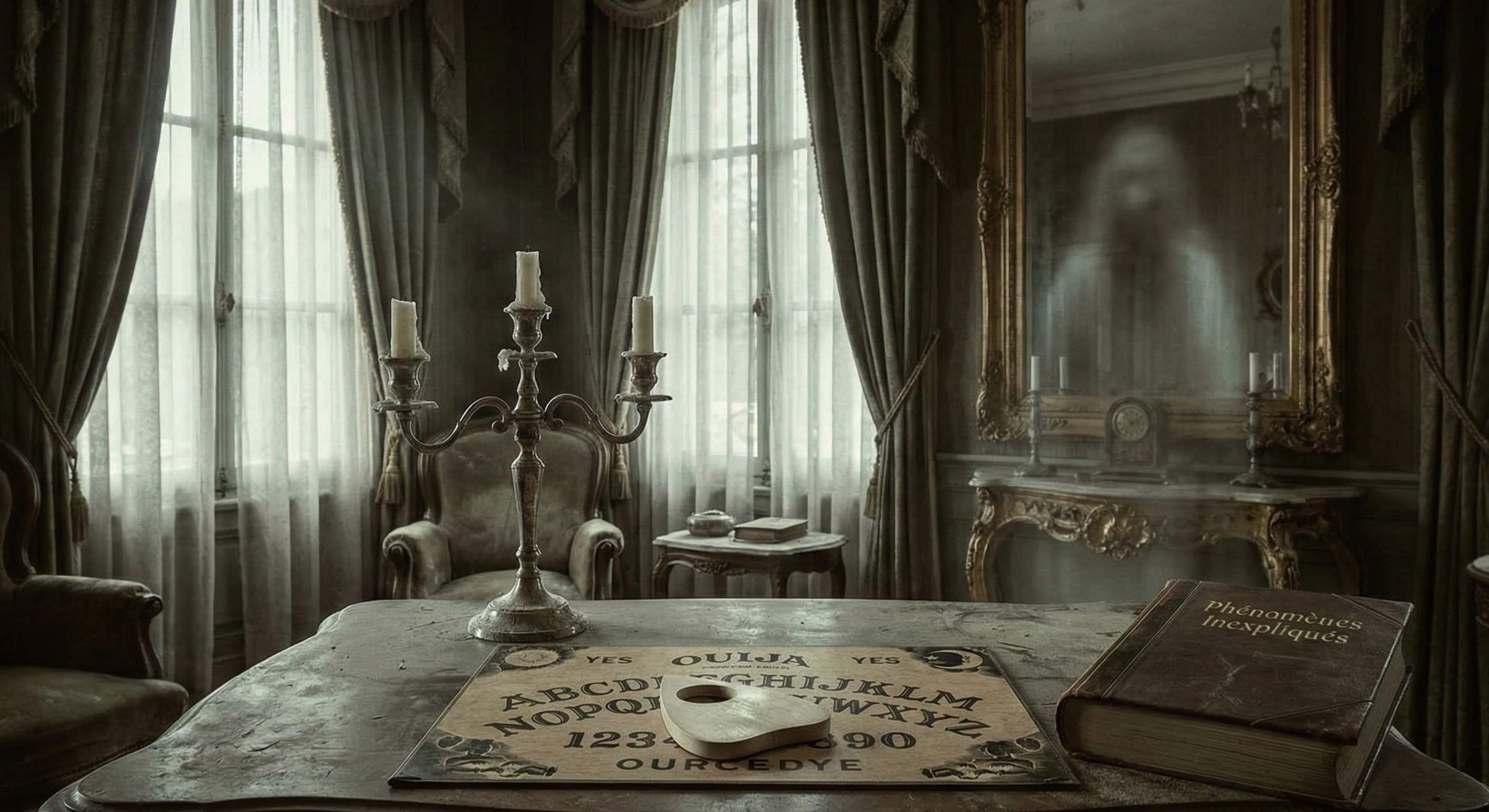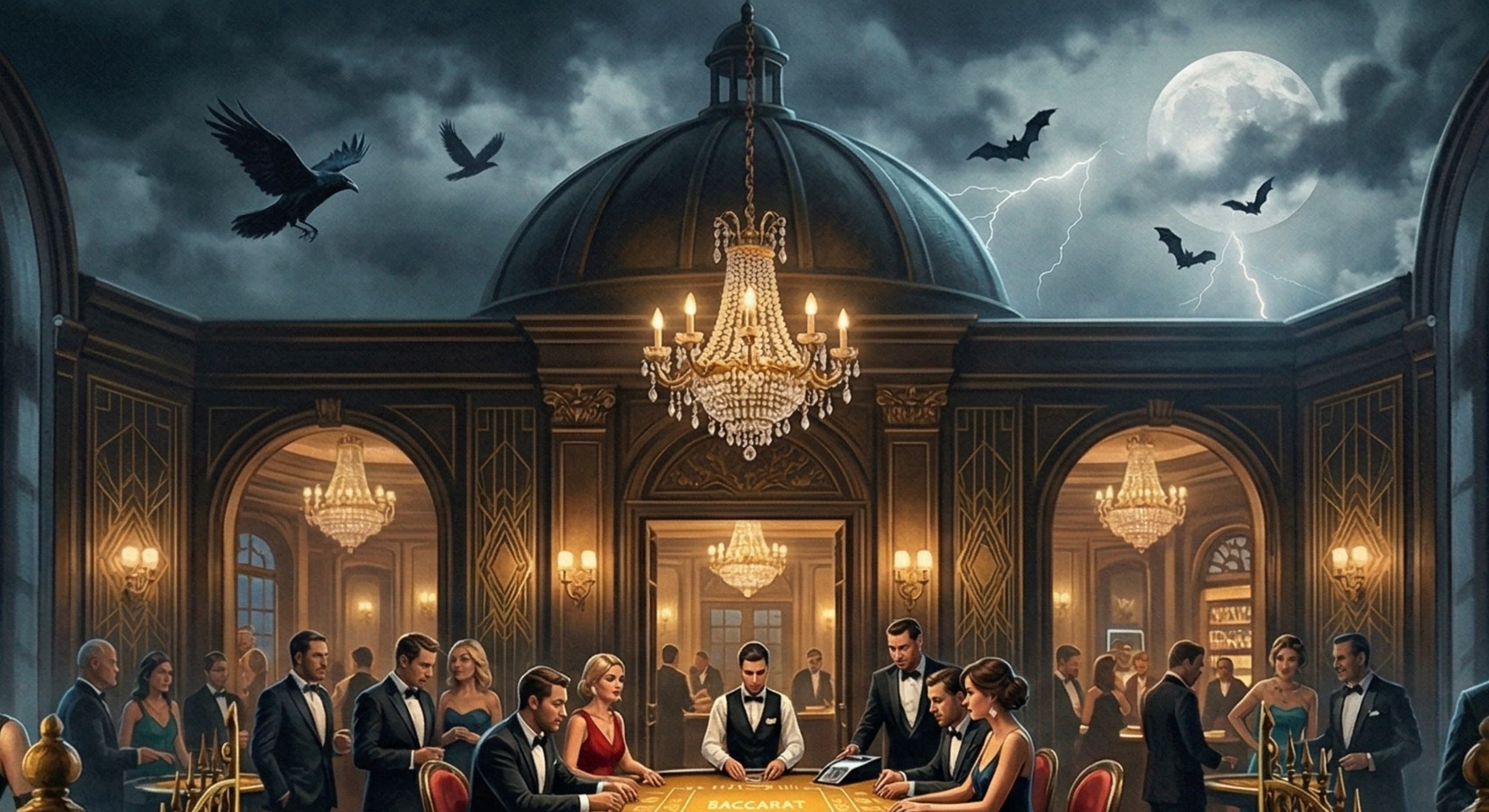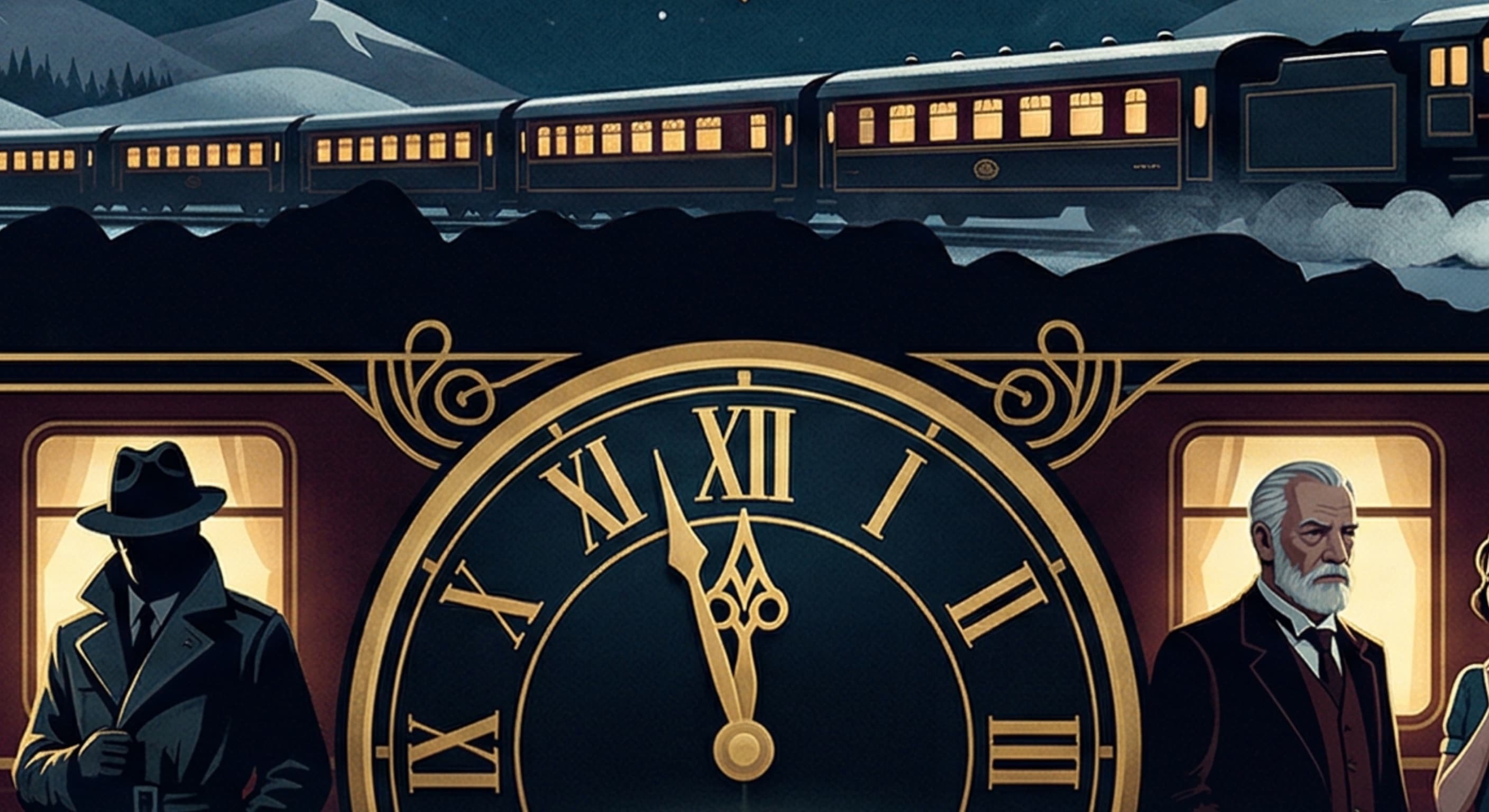
The evidence in the kit is already the prop set
A kit PDF contains five things: the host guide, one character sheet per player, the clues to hand out organized by round, the secret ballots and the solution. It does not contain invitations, name tags, place cards, awards or decorations. But the third item is the one people mean when they say props. Depending on the scenario, the clues take the form of letters, a register, a telegram, a newspaper clipping: documents laid out to look like the thing they are, not paragraphs of rules. Placed on a table under a lamp, they do more for the room than anything bought.
So the first decorating decision is how to present what you already have. Print the clues on slightly heavier paper than the character sheets if you can, and in color where a document is designed to look like a clipping; the text pages, the host guide, the sheets and the ballots, print in black and white with nothing lost. What the documents are, family by family, and why a laid-out report reads differently from a rules paragraph, is covered in Fake Documents, Evidence and QR Codes: What Makes a Printable Mystery Feel Real. Everything below is built around those pages, not instead of them.
Printable murder mystery decorations to add with a home printer
Four things earn their ink. Evidence tags: small numbered labels tied to objects around the room, a glass, a key, a coat, so that the space looks searched. A suspect board: a sheet of card on the wall with the cast listed and string between the names. A crime scene tape banner: a strip of yellow paper with black lettering across a doorway. And one sign per theme, which turns a hallway into a platform or a drinks table into a cashier's window.
Everything else is either already in the kit or does not need to be printed. Do not print fake police reports or extra clues of your own: the clue flow is built round by round, and an added document sends guests after a lead the solution never answers. Do not print place settings, menus or invitations before the four items above; they are pleasant, but nobody will remember them. The evening is carried by the documents and the light, and by the twenty minutes of printing described here. A host with one printer, one pack of card stock and a roll of string has everything required.
Evidence tags and a crime scene tape banner in twenty minutes
Evidence tags: in a word processor, make a table of small cells, about 2 by 3 inches, and type a number in each, one to twelve, with the word EVIDENCE above it. Print on card stock, cut, punch a hole in the corner, and tie each with string to an object that fits the story: a decanter for the manor, a deck of cards for the casino, a suitcase handle for the train. The numbers mean nothing; their job is to make guests look twice. A dozen tags scattered through two rooms is enough.
Crime scene tape: print the words CRIME SCENE DO NOT CROSS in large black capitals on yellow paper, landscape, one phrase per sheet, and tape the sheets end to end. Three sheets make a banner for a doorway; six make a strip across a mantelpiece. Hang it at chest height across the room where the crime is meant to have happened, or across the door of a room you want to keep guests out of, which is also a practical way to protect the kitchen. Both items take twenty minutes together and cost a pack of yellow paper.
A suspect board from the character list
The host guide gives you the cast: the core six roles that are always handed out, and the roles that join at eight, ten and twelve players. A suspect board is that list on the wall. Take a sheet of card or a corkboard, write or print each character's name and one-line public role on its own small card, arrange them in a circle, and pin a length of string from each to the victim's name in the center. Leave the strings loose; guests will re-pin them as the rounds go on, and by round three the board records what the room believes.
Use only characters actually in play, and only public information, the same rule as for name tags: the name and the role, never a secret from the sheet. Making both from the same list, in the same font, is described in Name Tags and Place Cards for a Murder Mystery. One warning: the host knows the culprit, so the host does not touch the strings. A board that has been quietly arranged by the one person who read the solution is a spoiler, and guests notice.
One sign per theme: a departures board, a casino sign, a wine label
One sign, placed where guests arrive, sets the scene faster than a room full of small touches. For Crime Aboard the Orient Express, a departures board: a landscape sheet with a dark background, a departure time, the train's name and a row of destinations, taped above the front door so that guests walk in onto a platform. For Murder at the Royal Casino, a casino sign in gold lettering on black, an art deco font, with the words CASINO and OPEN, hung over the drinks table, which becomes the bar. For The Last Vintage, a wine label: print a label that reads Saint-Emilion and 1985 in a serif font, and stick one on every bottle on the table, water included.
The same idea covers the other kits. A family crest on a cream page for The Cursed Manor. A tattered map on brown paper for The Cursed Island. A masked ball invitation, in calligraphy, framed by the door for The Masked Ball. A film clapperboard for Hollywood Noir. One sign each, printed on one page, and the rest of the seven murder mystery kits look after themselves through the documents.
Lighting does more than paper
Every printed item above is worth less than the lamps. A room at normal brightness looks like a living room with paper on the walls; the same room with the overhead light off, three lamps on, and candles on the table, looks like the place in the story. Turn off the ceiling light first. Move two lamps to the corners so that faces are lit from the side. Put the evidence on the table under the brightest lamp, so that guests gather there. A string of warm bulbs along the mantelpiece replaces a shelf of bought decorations. That is the order of priorities in Decorate a Murder Mystery Party at Home, which starts with light because light is free.
Then music, then the printed items, then costume. The printing, all of it, fits in an hour the day before: the kit's own pages, one envelope per character, and the four extras above. If time runs short, cut the tags before the suspect board, and the suspect board before the sign. Keep the light. What the kit contains, tier by tier, and how the license lets you print it again for the next party, is on the printable murder mystery kit page.
Frequently asked questions
Does the murder mystery kit include decorations?+
No. The kit PDF contains the host guide, one character sheet per player, the clues organized by round, the secret ballots and the solution for the host. Decorations, invitations, name tags, place cards and awards are not included. The clues themselves, laid out as letters, registers, telegrams or clippings depending on the scenario, are the real props.
What props are already in the PDF?+
The clues you hand out round by round. Depending on the scenario they take the form of a letter, a register, a telegram or a newspaper clipping, laid out to look like the document they represent. Printed on heavier paper and placed on the table under a lamp, they do more for the room than anything bought.
How do I make crime scene tape at home?+
Print the words CRIME SCENE DO NOT CROSS in large black capitals on yellow paper, one phrase per landscape sheet, and tape the sheets end to end. Three sheets cover a doorway, six a mantelpiece. Hang the banner at chest height across the room where the crime is meant to have happened.
Do I need color printing for the props?+
No. Evidence tags, the suspect board and crime scene tape work in black ink on colored paper or card. The kit's own text pages, the character sheets, the host guide and the ballots, print in black and white with nothing lost. Save color, if you have it, for a clue laid out as a clipping and for the one sign per theme.
Can I add my own clues as props?+
Better not. The clues in the kit are organized by round so that each one narrows the field, and a document you add sends guests after a lead the solution never answers. Add things that carry no information instead: numbered evidence tags, a suspect board built from the cast list, a sign by the door and the right lighting.