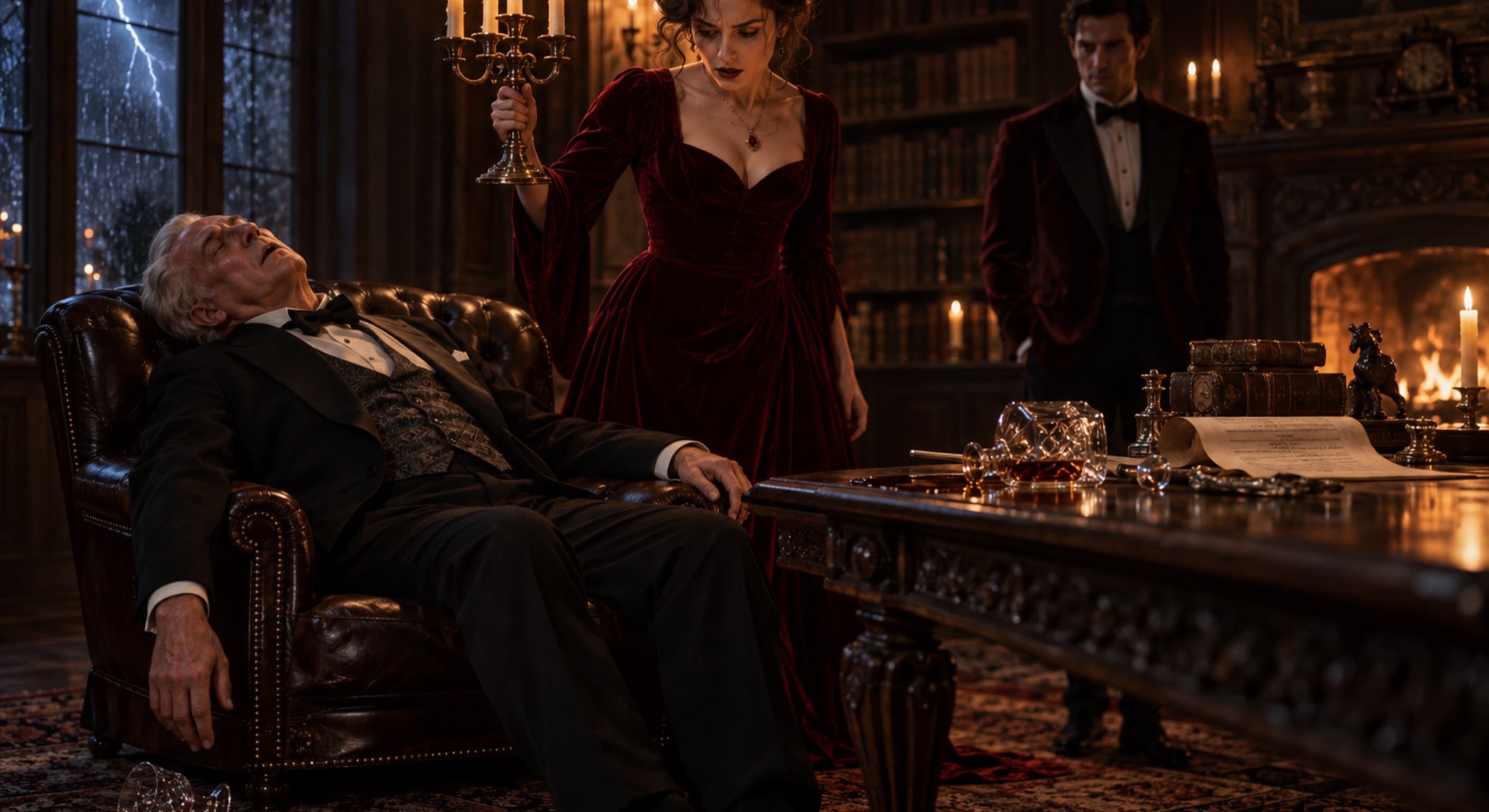
They stay in the story
Nothing is removed from the file when a role is not dealt. The exhibits are common property, twenty-four or thirty depending on the file, and the case does not shrink with the cast. An undealt character's social document sits in the folders like any other exhibit.
So the table still learns what that person wanted, what they were owed, where they were seen. What is missing is only the ability to interrogate them, which changes the texture of the evening rather than its difficulty. The four files are on the murder mystery kits page.
The rule the host follows
Answer briefly, from the guide, and never invent. The host confirms what the absent character's document already says and adds nothing: no new time, no new witness, no new object, no new movement.
That single rule is what stops the host becoming a source of fresh clues. If it were loosened, a table of six would be playing a different case from a table of twelve, and the scoring grid would no longer mean the same thing.
What a precise question gets
A specific question gets a specific answer, when the document supports it. Asked whether a name appears in the cloakroom register, the host can confirm what the register shows. Asked what that person was thinking, the host has nothing to give, and says so plainly.
The practical form of that answer is short: they confirm, they decline, or they point back at an exhibit. Hosts who improvise around it find the table starts interrogating them instead of the evidence, which is the failure mode to avoid.
Why no objective depends on an absent character
Each personal objective names two partners whose signature counts, and those partners are always core characters, which are always dealt. So nobody can be blocked by an absence.
That is why you may choose freely which supporting characters to leave out. The guide suggests an order, but a group of nine can pick the three personalities it likes best without breaking a chain. The supporting roles are modular by function, not minor by interest.
How it feels at six players
At six the table has the full twenty-four or thirty exhibits and six people to interrogate, so the reading load per person is higher and the conversation is tighter. Expect each person to work through three or four exhibits closely.
The six absent characters behave like background figures in a real enquiry: named in documents, discussed, never available for a straight answer. Hosts often say this is the version where the evidence matters most, precisely because you cannot ask anyone to explain it. The evening routine is on the printable murder mystery kit page, and what the host may say for an absent character is written out in the guide on the case file portal.
Frequently asked questions
What happens to characters nobody plays?+
They stay in the story. Their social document remains among the exhibits, so the table still learns what they wanted and what they did, and the host answers briefly for them when a document raises a question.
Can the host invent answers for them?+
No. The host confirms what the absent character's document already says and adds nothing: no new time, witness, object or movement. That rule keeps the host from becoming a source of fresh clues.
Can an objective be blocked by an absent character?+
Never. Every personal objective names two partners among the core characters, which are always dealt. That is why you can freely choose which supporting characters to leave out at any head count.